

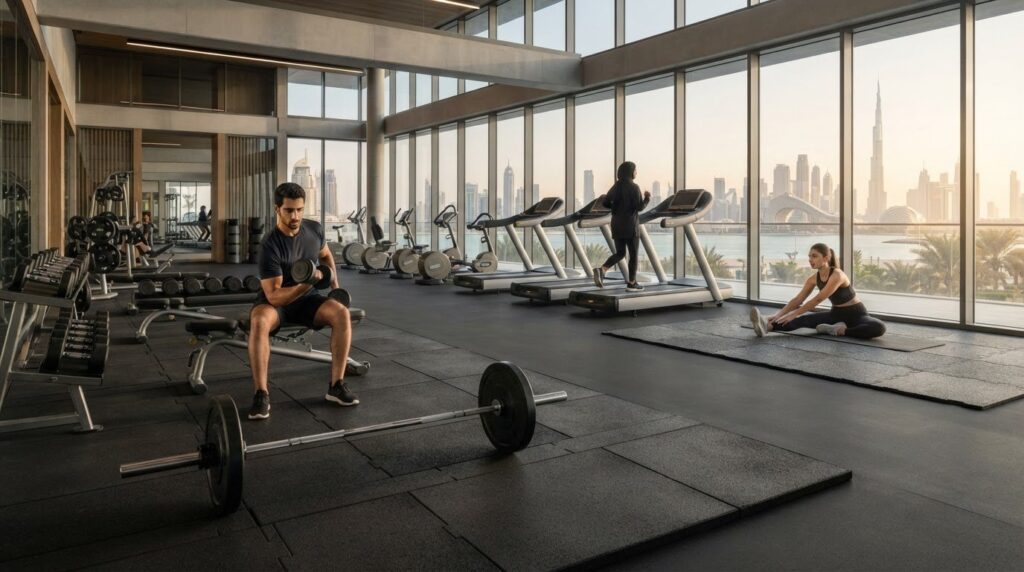
Choosing one rubber floor for every gym zone can leave the busiest area under-protected while quieter spaces pay for features they don’t need. Choosing rubber flooring for gym UAE means matching the format to the work happening there, whether weights are being dropped, machines are in use, or members are stretching.
It’s reasonable to be unsure whether tiles, rolls, or specialist mats make the most sense. The right choice depends on how each area is used, the demands placed on the surface, and the conditions beneath it. A product description alone won’t answer every question.
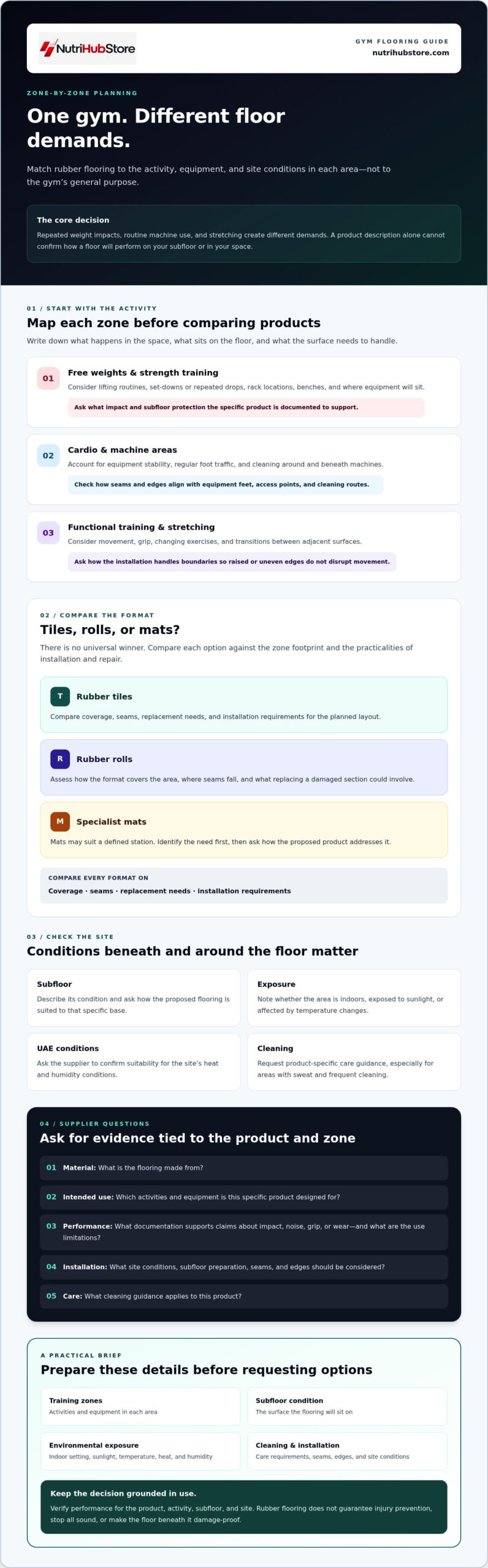
Use a zone-by-zone approach to compare formats and identify which performance details matter for your gym. Ask suppliers about material, intended use, impact and noise performance, cleaning, and installation conditions, including exposure to UAE heat and humidity. This helps you coordinate flooring with your wider gym setup and avoid paying for specifications that don’t match actual use.
Key Takeaways
- Start with the activity in each zone, then identify the flooring demands it creates, from repeated weight impacts to routine equipment use.
- Compare tiles, rolls, and mats by coverage, seams, replacement needs, and installation requirements.
- For rubber flooring for gym UAE, ask suppliers to verify material, intended use, cleaning guidance, and suitability for the site conditions.
- Prepare a brief covering training zones, subfloor condition, environmental exposure, cleaning, and installation before requesting options.
- Plan flooring as part of the wider gym setup, and avoid paying for specifications that don’t match how the space will be used.
Why Rubber Flooring for a Gym in the UAE Needs a Use-First Decision
A surface that works beneath a treadmill may be a poor match for repeated barbell drops. Choosing rubber flooring for gym UAE starts with the activity in each zone, not the assumption that one product can handle every demand.
Gym rubber flooring is a category of surfaces designed for training spaces, not one uniform product with identical performance. Formats, materials, construction, and installation can differ. These details affect how a floor responds to impact, foot traffic, equipment movement, grip, noise, and cleaning.
Broad claims such as “shock-absorbing” or “non-slip” aren’t enough to make a choice. Ask what each claim means for the specific product and intended use. Supplier documentation should support performance statements, including claims about impact management, acoustic properties, or wear resistance. A product description alone may not show how the flooring will perform over your particular subfloor.
Different activities create different demands. Repeated weight impacts may call for closer attention to load and subfloor protection. Cardio areas may need a surface that stays stable under equipment and regular foot traffic. Sweat and frequent cleaning also make care instructions relevant. The overview of rubber surfacing options illustrates how rubber surfaces can vary in form, but it shouldn’t be treated as proof of a gym product’s performance.
What rubber flooring can and cannot do in a gym
A suitable rubber surface can act as a protective layer between routine gym use and the floor below. Depending on the product, activity, subfloor, and installation, it may also help manage contact impact or noise. Rubber doesn’t guarantee injury prevention, stop all sound from travelling, or make the floor beneath it damage-proof. Verify each claim for the product and zone.
Why UAE facility conditions belong in the assessment
Consider where the flooring will sit. Is the area fully indoors, exposed to sunlight, or affected by temperature changes? These conditions can matter to material suitability, so describe the actual site to the supplier and ask for product-specific confirmation. Don’t assume a surface suited to an enclosed training room is also suitable for an exposed area.
Before comparing products, write down what happens in each zone and what conditions the site exposes the floor to. This gives suppliers a clearer brief and helps you separate documented performance from general marketing language.
How Gym Activities in the UAE Change Rubber Flooring Requirements
A free-weight platform and a cardio lane face different daily demands, so choosing a surface based only on the gym’s general purpose can leave a specific zone poorly matched. No single flooring specification establishes suitability for every gym zone; the activity, equipment, traffic, and site conditions must all fit.
Free-weight and strength-training areas
Start with the actual lifting routine. Will users set down dumbbells, reposition benches, or repeatedly drop weights? Note where racks and other equipment will sit, then ask what level of impact and subfloor protection the flooring is documented to support. Don’t assume a product suits heavy lifting simply because it’s described as gym flooring.
Compare formats against the layout. Dedicated mats may cover a defined station, while tiles or rolls may suit broader coverage. The best fit depends on the footprint, edges, and how a damaged area could be replaced. Ask the supplier for tested performance information and any use limitations for the specific product. For strength machines, confirm that the surface is appropriate beneath the equipment and that placement won’t leave unstable joins or edges.
Cardio and functional-training areas
Cardio equipment needs a stable base, and the zone also sees regular foot traffic. It may need frequent cleaning around and beneath machines. Check how seams and edges align with equipment feet, access points, and cleaning routes. A format that covers a large area neatly may be less convenient if future repairs require replacing a wider section.
Functional training involves moving users and changing exercises. Assess whether the product’s documented grip and movement feel suit the planned activities, and inspect transitions between surfaces. A raised or uneven edge can disrupt movement, so ask how adjacent flooring should meet and how the installation handles boundaries.
Compare specialist surfaces only if the facility has a clear need that standard options may not meet. Identify the activity or equipment requirement first, then ask the supplier to explain how the proposed surface addresses it. This keeps “specialist” from becoming an expensive label without a practical reason.
- Free weights: Focus on repeated impact, equipment positions, and documented subfloor protection.
- Strength machines: Check support beneath equipment and the placement of joins.
- Cardio: Plan for stable equipment, foot traffic, and cleaning access.
- Functional training: Assess movement, grip claims, and transitions between surfaces.
Use these zone notes when comparing rubber flooring for gym UAE, then browse the shop categories as one reference for broader setup planning.
Rubber Tiles, Rolls, and Mats: Which Gym Flooring Format Fits?
A format that makes repairs easy may introduce more seams, while a broad covering may be harder to handle or fit around the room. For rubber flooring for gym UAE, compare installation and upkeep trade-offs alongside the space each format needs to cover.
| Format | Modularity and seams | Coverage and replacement | Installation checks |
|---|---|---|---|
| Interlocking tiles | Modular layout; connections create joins between sections. | Can suit defined zones. A damaged tile may be replaceable on its own, depending on the design. | Check edge finish, connector fit, subfloor condition, and product-specific installation guidance. |
| Rolls | Fewer joins across a broad area, though seams may still be needed. | Can cover larger, continuous spaces; a repair may affect a wider section. | Confirm room measurements, delivery access, handling, seam placement, and installation method. |
| Mats | Separate pieces with visible boundaries around targeted areas. | Suit a defined equipment footprint or activity station; replacement can remain local to that area. | Check whether the mat stays correctly positioned and fits the equipment and surrounding floor. |
When interlocking rubber tiles make sense
Tiles are worth comparing when a gym has distinct zones or may need localized repairs. Their modular layout can make it possible to replace an individual section, but don’t assume every tile shares the same material, thickness, edge profile, or joining system. Ask how the connectors meet, whether the edges sit securely, and what subfloor preparation the supplier specifies. For a detailed walkthrough of subfloor checks, layout planning, and fitting steps, the interlocking gym tiles UAE installation guide covers what to inspect and prepare before laying the first tile.
More joins also mean more edges to consider during layout and cleaning. Review a sample or product documentation, where available, and confirm how the proposed system handles room boundaries and transitions to other surfaces.
When rolls or dedicated mats deserve comparison
Rolls may suit broad coverage where a continuous-looking surface is useful, but room dimensions alone don’t settle the choice. Check access routes for handling, how seams will fall around equipment, and what installation the product requires. A roll that’s awkward to move or fit may complicate an otherwise simple floor plan.
Compare mats when a machine, rack, or training station has a defined footprint. They can limit coverage to the area that needs it, but the mat’s size, position, and edges still need to work with the surrounding floor. No format wins by default. Match it to the room, activity, repair plan, and verified product details. A technical guide to gym surfaces can help frame questions for supplier discussions.
Rubber Flooring for Gym UAE: What to Check Before Buying
A flooring sample can look right and still fail the project if the subfloor, room access, or intended use doesn’t match its installation requirements. Before choosing rubber flooring for gym UAE, work through the site checks in order and get product claims in writing.
- Map the use zones. Mark where free weights, strength machines, cardio equipment, and functional training will sit. Note equipment positions and movement paths so the flooring plan reflects actual use.
- Inspect the subfloor. Ask an installer to assess its condition and suitability before finalising a product. Record transitions to other floor surfaces, drainage concerns, and uneven or damaged areas that may affect installation.
- Compare formats. Weigh tiles, rolls, and mats against coverage needs, seams, handling access, and how a damaged area could be replaced. Check that the proposed format suits the room layout.
- Verify product claims. Request product-specific information on material, intended use, cleaning, and environmental suitability. Don’t treat general claims about grip, impact, or sound as a guarantee for your site.
- Plan installation. Confirm who prepares the subfloor, handles transitions, installs the flooring, and advises on care. Clarify the sequence before equipment placement or other work begins.
Questions to ask a flooring supplier
Ask which activities and installation conditions the specific product is designed for. If the supplier claims impact, acoustic, or slip performance, request supporting documentation and ask what limitations apply. Confirm cleaning guidance, how a damaged section can be replaced, how edges and transitions should be handled, and who is responsible for installation tasks.
Ask about environmental suitability, too. Is the area indoors, exposed to sunlight, or subject to temperature changes? Describe the conditions and ask the supplier to confirm whether the product is suitable rather than relying on a broad claim about rubber flooring.
Site checks that prevent avoidable mismatches
Measure the room and mark equipment footprints, walkways, training zones, and door access. Have the installer assess the subfloor and transitions before settling on a product. If drainage or sunlight exposure may affect the site, flag it early and ask how it changes the product or installation recommendation.
Project costs depend on product choice and site details, including preparation, access, coverage, and installation requirements. A quote without those details may not reflect the full scope. Treat flooring as part of coordinated gym setup planning, and compare proposals against the same site brief.
Plan Rubber Flooring for Your Gym with the Right Support
Choosing rubber flooring for gym UAE projects gets easier once you define the training zones and match each one to a format and product specifications suppliers can verify. A useful project brief keeps the decision grounded in how the facility will operate, rather than broad claims or a single sample.
Turn a flooring comparison into a clear project brief
Before requesting product options, record the site details that could change the recommendation. Separate what you know from what still needs inspection or documentation.
- Use: List activities, traffic patterns, equipment locations, and separate training zones.
- Subfloor: Note the known condition and any visible issues, transitions, or drainage concerns for an installer to review.
- Exposure: Record whether each area is indoors, receives sunlight, or experiences temperature changes.
- Cleaning: Describe routine cleaning needs and ask for product-specific care instructions.
- Installation: Confirm access, preparation requirements, edge details, and who is responsible for each installation task.
- Evidence: Mark performance claims that need product documentation, such as impact, acoustic, grip, or environmental suitability.
This brief also helps you compare supplier recommendations on the same basis. If a proposed product suits only part of the facility, identify that zone rather than treating it as the default for the whole floor. For other surface types, use a fitness flooring technical guide as a deeper reference, while checking each product’s own documentation before deciding.
Choose a practical next step for your facility
Nutrihub Store offers fitness and sports flooring, gym setup, and equipment servicing. These services can form part of a coordinated facility plan. Confirm product materials, specifications, installation terms, and current listings before selecting an option. Compare relevant categories and gym setup options against the site brief, not general marketing language.
Before committing to a format, send the brief to your supplier and request a product-specific assessment against the actual zones, subfloor, exposure, cleaning needs, and installation conditions. Which requirement still needs written confirmation?
Make Your Flooring Choice Fit the Way Your Gym Works
The strongest flooring plan starts with the training zones, not a one-size-fits-all product. Match tiles, rolls, or mats to each area’s activity and layout, then check that the supplier’s documentation supports the performance claims and site conditions that matter to your facility.
For rubber flooring for gym UAE, put your zone plan, subfloor notes, environmental exposure, cleaning needs, and installation questions into a brief before comparing options. This helps you judge proposals on relevant details rather than broad promises.
Nutrihub Store offers fitness and sports flooring, gym setup, and equipment servicing. Explore the available categories, then confirm product details and suitability for your project before choosing.
With a clear brief and verified specifications, you can move forward with a surface plan built around how your gym is actually used.
Frequently Asked Questions
Is rubber flooring suitable for every gym area?
No, rubber flooring isn’t automatically the right choice for every gym zone. Free weights, cardio machines, and functional training place different demands on grip, impact management, equipment stability, cleaning, and surface transitions. Choose by activity and site conditions, then check the product documentation for its intended use. A surface that suits one area may not meet another’s needs, so plan each zone separately.
Which is better for a gym: rubber tiles or rubber rolls?
Neither format is universally better. Let the room layout and maintenance plan guide the choice. Interlocking tiles can make localized replacement possible, depending on their design, but they create joins to consider. Rolls can cover broader areas with fewer seams, though room access, handling, and installation need checking. Compare coverage, edges, equipment placement, subfloor condition, and the supplier’s installation instructions before choosing.
Can rubber gym flooring reduce noise from dropped weights?
It may help manage impact noise, but the result depends on the specific flooring, the weight and frequency of drops, the subfloor, and installation. Rubber flooring shouldn’t be treated as complete soundproofing. Ask the supplier for product-specific acoustic or impact documentation, including any stated limits and test conditions. If noise transfer matters, describe the building and training use clearly so the recommendation addresses the full floor assembly, not just the surface.
How thick should rubber flooring be for a weightlifting area?
There isn’t one thickness that suits every weightlifting area. The required specification depends on the lifting routine, equipment placement, expected impact, and the subfloor that needs protection. Thickness alone doesn’t prove performance, so request product documentation for the intended use and ask what limitations apply. Share details about the weights and how they’re set down or dropped, then have the supplier assess the specific zone before you select a product.
Is rubber flooring suitable for outdoor gym areas in the UAE?
Some products may be suitable for outdoor use, but don’t assume every rubber floor can handle sunlight or temperature exposure. Tell the supplier whether the area is fully exposed, partly shaded, or subject to temperature changes, and ask for written confirmation that the exact product suits those conditions. Check installation requirements, cleaning guidance, and any stated environmental limitations before specifying it for an outdoor gym area.
How do I choose rubber flooring for a home gym versus a commercial gym?
Start with actual use, not the label. A home gym may need coverage for a few pieces of equipment, while a commercial facility may have distinct zones, heavier foot traffic, and a more involved replacement plan. List activities, equipment positions, cleaning routines, and the subfloor for either setting. Then compare tiles, rolls, or mats and verify each product’s intended use and performance claims with the supplier.
What should I check before installing rubber flooring over concrete?
Have the installer assess the concrete before choosing or laying the flooring. Confirm that the surface is clean, level, and dry, and ask how cracks, uneven areas, transitions, or drainage concerns could affect preparation and installation. Check the product’s compatibility with the subfloor and follow its specific installation guidance. Don’t rely on appearance alone; ask the installer to identify any site issues that need attention first.