


Nutrihub nutrition best practices begin with balanced meals built around whole grains, lean protein, healthy fats, fruits, and vegetables. Limit saturated and trans fats, along with excess dietary cholesterol. Protein sources also vary in amino acid profiles, bioavailability, and other nutrients, so including a range of foods matters.
It’s easy to focus on one supplement or nutrient and overlook the meals that shape your daily routine. A more useful approach is to match food choices to your training and wellness goals, then use supplements to complement that foundation, not replace it.
This guide explains how to build balanced eating habits, compare protein sources, and consider supplement choices carefully. You’ll also learn how nutrition products and fitness offerings can support different goals in the UAE, and how to make choices that suit your routine.
Key Takeaways
- Build everyday meals around whole grains, lean protein, healthy fats, fruits, and vegetables instead of relying on supplements to do the work.
- Compare protein sources by their amino acid profiles, bioavailability, and other nutrients, not just by their protein content.
- Match supplement categories, such as whey, pre-workout, or vitamins, to your routine and goals.
- Use the location, booking, and delivery details in the guide to understand the practical next steps for UAE customers.
- Consider how sports nutrition products and fitness support can fit alongside consistent eating habits and training.
What nutrition products and services does Nutrihub offer?
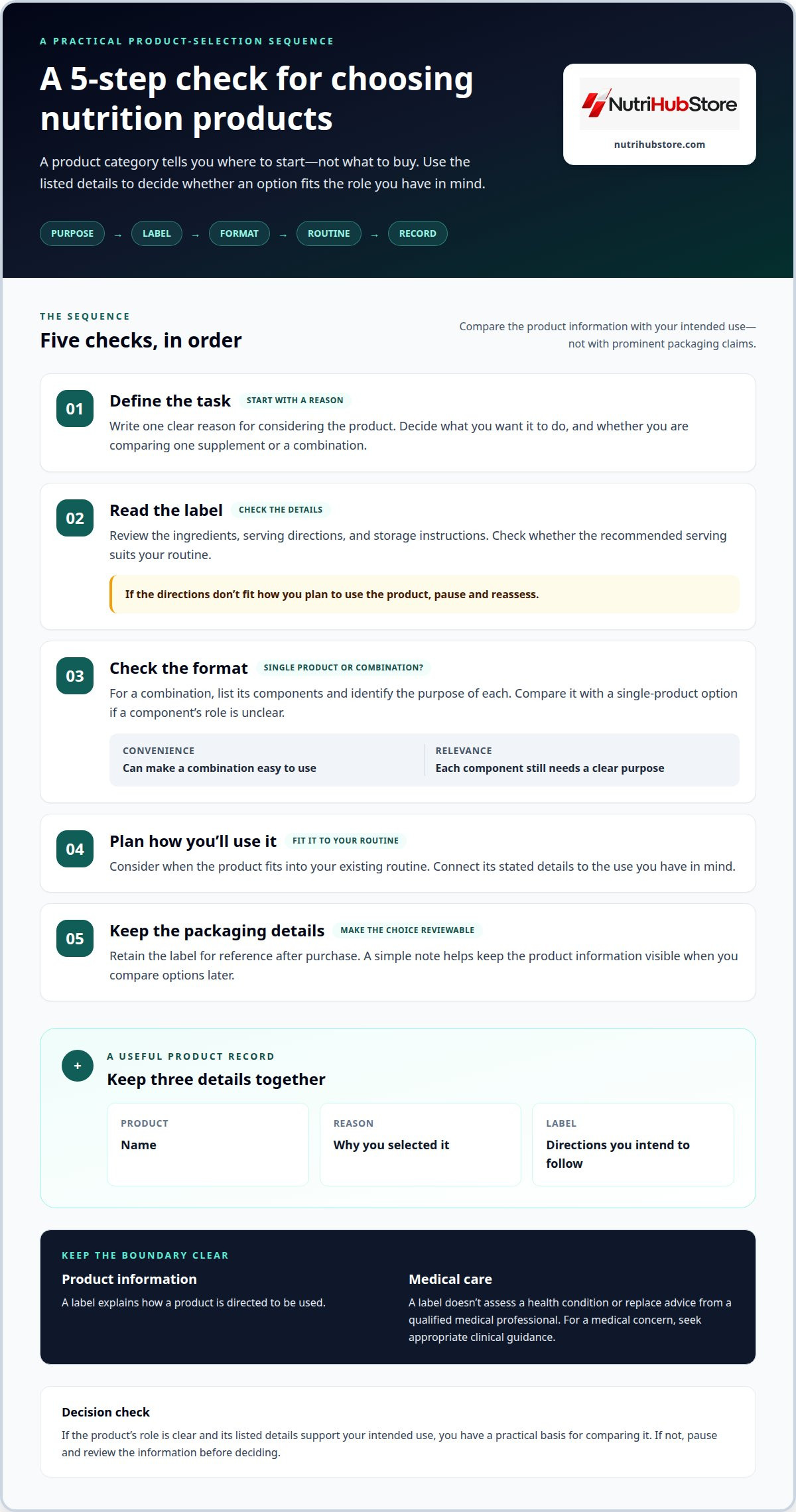
A product category tells you where to start, not what to buy. A supplement catalogue may group items by purpose, such as training support or general nutrition. Begin by defining what you want a product to do. For example, decide whether you’re comparing one supplement or considering a combination.
Product labels provide practical details for comparison. Read the serving directions, ingredient list, and storage instructions before use. Check whether the recommended serving suits your routine instead of relying on prominent packaging claims. If the directions don’t fit how you plan to use the product, pause and reassess.
Combination formats can be convenient, but convenience alone doesn’t make every item relevant. List the components and identify the purpose of each. If you can’t explain why a component belongs in your routine, compare the combination with a single-product option. This helps prevent a bundle from becoming an unplanned collection of supplements.
Use this sequence to assess a product option:
- Define the task. Write one clear reason for considering the product.
- Read the label. Review ingredients, serving directions, and storage instructions.
- Check the format. Compare a single product with a combination option.
- Plan how you’ll use it. Consider when it fits into your existing routine.
- Keep the packaging details. Retain the label for reference after purchase.
Keep a simple note of your choices. Record the product name, why you selected it, and the label directions you intend to follow. When comparing options, this record helps you remember their differences and keeps actual product information in view.
Product information and medical care serve different purposes. A label explains how a product is directed to be used, but it doesn’t assess a health condition or replace advice from a qualified medical professional. If a medical concern affects your supplement decisions, seek appropriate clinical guidance rather than relying on a retail description.
Look for clear product information before making a choice. A useful comparison connects the stated product details with your intended use. Don’t assume a combination is automatically better or that a category name explains everything inside. Read the information for each item and decide whether its role is clear.
A careful selection process makes product decisions easier to review later. Start with one defined purpose, read the label, and record the details that shaped your choice. This gives you a more practical basis for comparing nutrition products than packaging language alone.
Set a clear purpose and compare the listed details with your needs. Treat a product listing as a starting point, not a recommendation: review the information and decide whether the item suits the role you have in mind. Keep your reason for considering it with the label details, and revisit your choice if the information doesn’t support your intended use. A clear purpose makes it easier to assess whether an option belongs in your routine.
Where are Nutrihub Nutrition locations in the UAE?
National coverage and a walk-in branch answer different questions. Nutrihub Store serves customers across the UAE, but nationwide coverage doesn’t identify a shop address. Distinguish service coverage from a customer-facing retail location before planning a visit. A countrywide scope alone can’t tell you where to park, which entrance to use, or whether you can browse products in person.
For a physical visit, useful directions need a specific destination. Look for a complete street address, building name, and map pin that match the business. An emirate or general area may help orient you, but it won’t reliably guide you to a door. The same distinction applies to a showroom, product pickup point, or project site.
Start by deciding what location you need. A customer collecting an order needs a pickup address. Someone planning gym flooring needs to consider the project site. A shopper comparing products may not need to travel. Treat these as separate tasks instead of assuming one address serves every purpose.
Use this practical checklist before arranging a visit:
- Clarify the purpose. Decide whether you need a retail visit, pickup point, or project location.
- Find the full destination. Use a street and building address, not only a general UAE location.
- Match the details. Check that the map pin and business name refer to the same destination.
- Plan your route afterward. Only estimate transport and parking once you have a complete address.
For example, “serving customers across the UAE” describes geographic scope. It doesn’t mean there’s a public shop in every emirate. Likewise, a gym project’s location identifies where work takes place, not necessarily where products are sold. Keeping these meanings separate helps prevent an unnecessary trip or a misdirected delivery plan.
If you’re comparing products rather than arranging an in-person visit, browse the online nutrition shop. Online browsing gives you a way to review product categories without treating the store page as a physical branch address. For a facility project, use the project’s actual site as the location reference, rather than assuming it matches a retail destination.
Plan around the destination you need, not a broad coverage description. A complete street address is the practical detail for a visit; a project site is the relevant reference for location-based work. Keeping those details separate makes planning clearer for customers across the UAE.
How can I contact Nutrihub Nutrition or book an appointment?
A booking request is clearer when it states the reason. First decide whether you need product information or an appointment, as each request calls for different details. For example, a supplement question should name the product, while an appointment request should explain its purpose.
Use the official contact route on the business’s website and keep your message concise and specific. Include your name, preferred reply method, and the subject of your request. Don’t send sensitive medical details through a general enquiry form. A product question usually needs only the product name and the point you want clarified.
For an appointment request, prepare the practical details before sending your message. State your goal, preferred timing, and whether you’re asking about an in-person or remote meeting. These are preferences, not a confirmed booking. For example: “I’d like to discuss nutrition planning for strength training, and can attend on weekday evenings.”
Use this sequence to prepare a clear request:
- Choose the request type. Separate product support from appointment scheduling.
- Describe your goal. Name the topic, such as meal planning or supplement use.
- Share useful context. Include your training routine or product name, not unrelated personal details.
- Suggest workable timing. Give a preferred day or time window.
- Review before sending. Check your contact details and remove sensitive information.
Specific questions lead to more useful replies. Instead of writing “I need nutrition help,” say whether you want information about product ingredients, a personalised diet plan, or a training-related goal. A protein question can name the product and ask about its serving directions. A planning request can explain the routine you want to support.
Keep expectations clear. An enquiry about a nutrition product is not a medical consultation. If a health condition or medication affects your food choices, seek appropriate clinical advice. A retail discussion can focus on product information, but it should not be treated as diagnosis or treatment.
Before considering the request complete, look for a direct reply confirming the next step. If asked for a preferred time, give a specific option rather than saying “anytime.” If clarification is requested, answer that point. Keep the conversation in one thread so the appointment purpose and timing are easy to follow.
For a smoother first exchange, prepare one sentence describing what you need and another naming your preferred next step. This makes a product question easier to route and an appointment request easier to understand, without confusing general nutrition information with personal medical care.
Does Nutrihub Nutrition offer online consultations or delivery
An online shop and an online consultation are different services. The first lets you review products; the second involves a scheduled conversation about personal goals. Viewing a whey product page, for example, doesn’t mean you’ve booked nutrition advice. Keep the two tasks separate when deciding what support you need.
The online shop is a practical starting point for browsing nutrition products. Compare product names and available information before deciding what suits your routine. A product page can support a buying decision, but it isn’t an individual assessment of your meals, health history, or training schedule.
Delivery is a separate part of an online purchase. For a UAE order, the destination and checkout terms determine the delivery process. Before completing an order, review the delivery area, any displayed fee, estimated timing, and payment conditions. Don’t assume the same process applies in every emirate.
Use this checklist when considering an online product order:
- Choose the product purpose. For example, decide whether you’re comparing protein products or another supplement category.
- Read the product details. Review ingredients and serving directions rather than relying only on the product name.
- Enter the correct destination. Your UAE address can affect whether delivery is available and how it is handled.
- Review checkout information. Read any displayed delivery charge, timing, and payment terms before placing an order.
- Keep the order record. Save the confirmation and product details for reference.
For a consultation, prepare different details. Write down your goal, typical training schedule, and questions. For example, ask how a product fits around your current routine. Direct health concerns and medication questions to an appropriate medical professional, since product information isn’t medical care.
Choose the format that matches your need. If you want to compare products, browse the online nutrition shop. If you want individualized advice, look for a clearly described appointment process and the scope of that discussion. An online product order alone doesn’t create a consultation or personalized plan.
Before proceeding, identify the outcome you expect. A product order is for purchasing an item; a consultation is for discussing personal questions with an adviser. In the UAE, consider whether the delivery destination and checkout terms suit your plans. Clear expectations help distinguish shopping, shipping, and nutrition advice.
What do customers say about Nutrihub Nutrition
A rating alone can’t tell you whether a nutrition product suits your routine. One customer may value clear product information, while another may focus on ordering or delivery. Read comments for specific experiences, not broad promises about results. A review describes one person’s experience, not what every customer will experience.
Look for details you can assess. A useful product review names the item and explains what the customer found helpful or confusing. A comment about taste, for example, says something different from feedback about ingredient information. Specific details matter more than praise such as “great” or “amazing,” which offers little guidance for comparing products.
Separate service feedback from product feedback. A comment about an order’s packaging doesn’t assess the product’s ingredients. Likewise, a positive product review doesn’t explain how an appointment or delivery went. Keep each review in its proper category and compare it with the question you need answered.
Use this four-step review check:
- Identify the subject. Is the comment about a product, order, delivery, or communication?
- Find the detail. Look for a named product or a clearly described experience.
- Check the context. A customer’s training routine may differ from yours.
- Compare recurring points. Repeated, specific observations are more useful than one vague comment.
Be cautious with performance claims. If a review says a supplement caused a particular result, that’s one person’s account, not proof the product will produce the same outcome for you. Training, food choices, and personal circumstances differ. Treat testimonials as context, not as a substitute for product directions or qualified medical advice.
Distinguish a customer’s opinion from information you can verify on a product page. A comment may describe personal taste or convenience, but ingredients and serving directions should come from the product information itself. If those details don’t answer your question, don’t substitute a reviewer’s guess.
Before reading feedback, write down your main concern. If you’re comparing protein options, focus on comments that name the product and describe the experience. If you’re assessing delivery, look for comments about ordering and receipt. This keeps unrelated praise from influencing a decision it can’t support.
Use customer feedback as one input, then base your choice on your needs and the product’s stated details. Browse the available nutrition products with that distinction in mind.
Nutrihub Store: Ronnie Coleman Creatine XS
NutriHub Store is a practical place to start when comparing sports nutrition products or planning a training space. If creatine is already part of your routine, review the product information and serving directions for Ronnie Coleman Creatine XS before deciding whether it suits your needs. For a protein option, compare Kevin Levrone Gold Whey with your nutrition goals and the product details.
Nutrition choices work best when they support a consistent routine, not replace balanced meals. For a broader fitness project, NutriHub Store also offers Gym Setup and Fitness & Sports Flooring. These services address different needs, from equipping a gym to planning its training surface.
Choose the product or project that matches your next practical step, then visit nutrihubstore.com to learn more or contact NutriHub Store.
Make your next nutrition choice deliberate
Lasting routines come from choices you can maintain, not from adding products without a clear reason. Pick one practical change that fits your training and daily habits. Keep the goal specific, such as planning your routine around workouts or making an existing habit easier to follow.
Before choosing a supplement, write down the role you want it to serve. Compare the product details with that purpose, then follow the stated directions. If your goal changes, reassess your choice instead of automatically adding another product.
Consider NutriHub Store’s nutrition products as one option, not a substitute for your own priorities. Choose a next step that suits your routine, then build consistency over time.
Choose one manageable action today. A steady routine begins with a decision you can put into practice.
Frequently Asked Questions
What does Nutrihub Store provide in the UAE?
NutriHub Store provides sports supplements and fitness-infrastructure solutions across the UAE. Its nutrition range sits alongside technical work for fitness facilities, including repair and maintenance for treadmills, bikes, ellipticals, strength machines, and multi-gyms. This distinction helps you identify whether you need a sports-nutrition product or facility support. A product enquiry and an equipment-maintenance request concern different parts of its work, which does not include medical consultations.