


Hydrolysis doesn’t remove lactose. That distinction makes hydrolyzed whey protein isolate for lactose intolerance easy to misread: hydrolysis breaks protein into smaller peptides, while isolation and filtration separate whey protein from some other milk components. A product may be low in lactose, but the word “hydrolyzed” alone doesn’t tell you how much remains.
If whey has caused digestive symptoms, a product that sounds easier to tolerate can be tempting. Yet an isolate may not suit everyone, and “low lactose” isn’t the same as “lactose-free.” Check the product’s own lactose information and serving details, then consider your personal history.
Hydrolysis and filtration describe different processes, not a guarantee of suitability. The label can help you assess lactose, but it can’t explain every reaction. It’s also important to distinguish lactose intolerance, which concerns digestion of milk sugar, from a milk allergy, which involves a reaction to milk proteins. Choose based on product-specific information, not assumptions about a processing term.
Key Takeaways
- Compare concentrate, isolate, hydrolyzed isolate, and non-dairy protein using the finished product label, not the processing name alone.
- When assessing hydrolyzed whey protein isolate for lactose intolerance, look for product-specific lactose information and the serving it applies to.
- Check the ingredient list too. Sweeteners and flavourings may affect your comfort, even when lactose is low.
- Use your past reactions to guide a cautious choice. Ongoing symptoms may mean whey isn’t the right option for you.
- Review the product information when browsing Nutrihub Store’s sports nutrition range. Don’t assume a product’s lactose content or suitability from its name.
What hydrolyzed whey protein isolate means for lactose intolerance
Product names combine terms about a protein’s source and form, but each term answers a different question. “Whey” identifies a milk-derived protein. “Isolate” names a form of processed whey, while “hydrolyzed” describes a change to the protein itself. If you manage lactose intolerance, knowing what each term means helps you separate useful product information from processing language.
Whey is one of the proteins found in milk. Manufacturers process it into forms such as concentrate and isolate, which differ in how the protein is separated from other milk components. Hydrolysis acts on the protein. A plain-language overview of whey protein appears in Whey protein and lactose intolerance.
How whey isolate differs from whey concentrate
Concentrate and isolate aren’t interchangeable names for the same powder. Processing separates whey protein from some other milk components, and the product name signals which form the manufacturer used. But that category name doesn’t tell you every ingredient or serving detail. Check the package for the named protein source, full ingredient list, serving information, and any product-specific lactose statement.
What hydrolysis changes in whey protein
Hydrolysis breaks protein chains into smaller peptide chains. It describes how the protein is processed, not the full composition of the finished product. In plain terms, hydrolyzed whey is whey protein processed into smaller peptide chains. Read the rest of the package for the dietary details that matter to you.
Think of the terms as separate label clues. “Whey” tells you the source; “isolate” identifies a form of processed whey; and “hydrolyzed” describes how the protein has been broken down. A label may use one or more of these terms, but none replaces the ingredient panel or product-specific nutrition information.
This distinction makes comparisons more precise. If two tubs both say “isolate,” compare their ingredients and serving information. If one also says “hydrolyzed,” treat that as a description of the protein form, not a complete account of the product. For hydrolyzed whey protein isolate for lactose intolerance, first identify what each label term tells you, then assess the remaining details against your needs.
Does hydrolyzed whey protein isolate remove lactose?
Not necessarily. A product’s lactose content depends on its formulation and manufacturing, so “hydrolyzed whey isolate” isn’t enough information to decide whether it suits you. Look for a lactose-specific statement on the finished product’s label, and check which serving it describes.
Hydrolysis and filtration do different jobs
Manufacturers may use different processing steps, and finished products can vary in composition. Filtration can separate whey protein from some other components, but the product name doesn’t show exactly what remains in a particular tub. Treat processing terms as descriptions, not substitutes for information about the finished powder.
How to interpret lactose-free and low-lactose claims
“Low lactose” and “lactose-free” are different claims. Read the exact wording on the package and check whether a stated amount refers to the powder, a scoop, or a prepared serving. A claim applies to the product carrying it, not to all whey isolates. Don’t assume a product is lactose-free unless its own information supports that claim.
If the label gives no lactose figure, don’t interpret the omission as zero. Check the ingredients and serving information, and compare products using the same serving basis. For hydrolyzed whey protein isolate for lactose intolerance, the relevant evidence is the finished product’s lactose information, not the processing name alone.
A lactose-related label can inform a food choice, but it can’t predict how your body will respond. The National Institute of Diabetes and Digestive and Kidney Diseases shares broader dietary guidance for lactose intolerance. You can also browse sports nutrition products and compare the information available for each product.
Hydrolyzed isolate, regular isolate, or another protein: how they compare
Choose according to the evidence and ingredients that match your priorities, not a single label term. The comparison below shows what each category can tell you at a glance and which product details you’ll need to make a more useful comparison.
| Protein type | Processing | Lactose evidence | What the label must confirm |
|---|---|---|---|
| Whey concentrate | Processed whey protein in a concentrated form. | The category name alone doesn’t specify lactose per serving. | Named protein source, serving information, and any lactose statement. |
| Whey isolate | Processed to separate protein from more of the other milk components. | Product-specific information is needed to compare lactose content. | Ingredients, serving details, and any stated lactose amount or claim. |
| Hydrolyzed whey isolate | Isolate that has also undergone protein hydrolysis. | Hydrolysis doesn’t provide a lactose figure. | Clear lactose information for the product and serving you’ll use. |
| Non-dairy protein | Made from a protein source other than whey; formulas vary. | Doesn’t use whey as its protein source, but other ingredients still matter. | Protein source, full ingredient list, serving details, and allergen information. |
Whey concentrate versus whey isolate
These whey forms can differ in how much of the original milk material remains, but their names don’t give the precise composition of a particular powder. Compare ingredient panels and serving sizes. If one label provides more specific lactose information than another, that detail may matter more than the category name.
Hydrolyzed whey versus non-dairy protein
Hydrolyzed whey is still dairy-derived. A non-dairy powder may suit someone who prefers to avoid whey, but plant-based formulas can use different protein sources and added ingredients. Two products in this category may list different primary proteins and flavouring ingredients. Consider your preferences and what you’ve tolerated before. Neither category guarantees a particular response.
Use the table to narrow your options, then compare labels side by side. If you prefer whey, focus on the details the manufacturer provides for that product. If you want to avoid dairy-derived whey, check that the alternative’s ingredients and allergen information align with that preference. Personal tolerance varies, so a category-level comparison can help you shortlist products but can’t predict your experience.
As you compare sports nutrition products, use the product information to check the details available for each option. For hydrolyzed whey protein isolate for lactose intolerance, weigh your ingredient preferences against the evidence on the product itself instead of choosing by processing terminology alone.
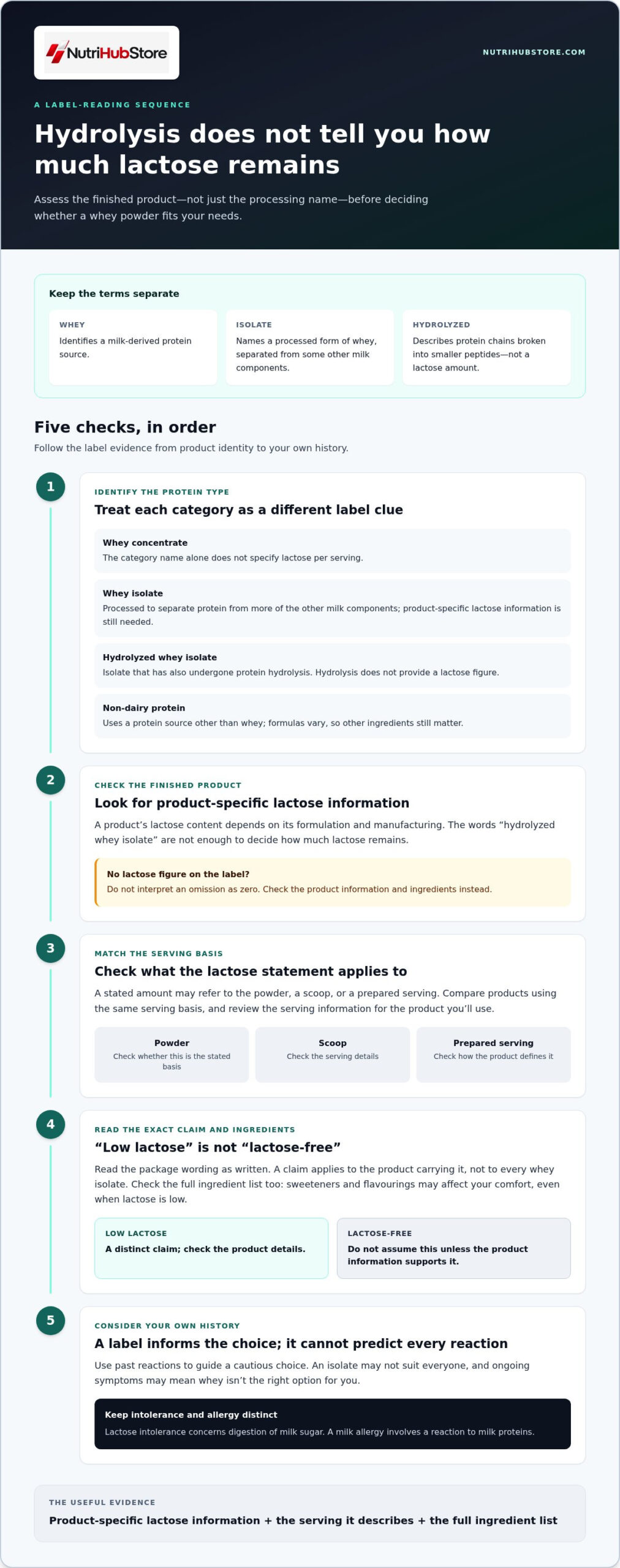
How to assess a whey product if lactose causes symptoms
A product label can help you assess lactose exposure, but it can’t explain every reaction or predict your personal tolerance. Use the same checks each time you compare whey powders, and pause if symptoms are severe or have no clear explanation.
A label-first checklist for choosing a product
Read beyond the front-of-pack claims. The ingredient panel and serving information give you a better basis for comparison, especially when a label combines terms such as “isolate,” “hydrolyzed,” and “lactose-free.” Check each detail separately rather than treating the terms as interchangeable.
- Read the lactose claim. Look for wording that specifically describes lactose, not just “isolate” or “hydrolyzed.” If the label states an amount, note the quantity it applies to. Don’t treat the absence of a lactose figure as proof that the product contains none.
- Inspect the ingredients. Identify the named protein source and read the full list, including sweeteners and flavourings. Some people find that ingredients besides lactose affect their comfort, so a reaction doesn’t automatically identify the cause.
- Check serving details. Compare the stated serving with the amount you’d actually use. A lactose figure or claim is useful only in context, so check whether it refers to a scoop, a prepared drink, or another specified quantity.
- Consider your own history. Recall which products you’ve used, how much you took, and what symptoms followed. A simple record of the product, serving, timing, and reaction can help you describe the pattern to a healthcare professional. It won’t diagnose the cause.
When weighing hydrolyzed whey protein isolate for lactose intolerance, keep the terms distinct: protein processing, a lactose claim, and your own response are separate pieces of information. A clear label helps you compare products, but it can’t promise symptom-free use.
When symptoms need a different explanation
Digestive discomfort after a shake may have causes other than lactose, including sensitivity to another ingredient. Lactose intolerance is a digestive response to lactose; a milk allergy is an immune reaction to milk proteins. Whey comes from milk, so a lactose-free claim doesn’t mean a product is free of milk proteins or suitable for someone with a milk allergy.
Don’t try to settle a suspected allergy by comparing labels alone. Seek medical guidance if you suspect an allergy, have severe symptoms, or experience persistent reactions without a clear cause. A healthcare professional can assess what may be happening. This checklist is for reading products, not diagnosing or treating symptoms.
Choose your next step with clear product information
A processing term can’t answer the question that matters most: how much lactose does this specific product contain per serving? Look for the product’s own lactose claim, then compare the ingredients and serving details with your priorities. Don’t infer lactose content from “hydrolyzed” or assume every whey isolate has the same formulation.
Match the product evidence to your own priorities
If lactose is your concern, give explicit lactose information more weight than a front-of-pack processing term. Check the stated serving size and full ingredient list, then compare products on the same basis. A lactose-related claim applies to the product carrying it, not to whey as a whole. Your own tolerance is a separate consideration: a label can inform your choice, but it can’t predict your response.
Use a simple filter as you compare: first, look for a clear statement about lactose; next, check the quantity or serving it describes; then review the named protein form and other ingredients. If a detail is missing, don’t fill the gap with a general estimate for concentrate, isolate, or hydrolyzed whey. The label provides product-specific evidence only when it states product-specific information.
Explore sports nutrition options with informed expectations
Nutrihub Store retails sports nutrition products, including whey and Kevin Levrone Gold Whey. The product name identifies an option in the range; it doesn’t state its lactose content, processing, or suitability for you. Check the product’s own packaging for those details before using it to make a lactose-related decision.
When comparing whey products, use guides for general context and the packaging for the current product’s ingredients, serving details, and lactose information. Keep those roles distinct: general information can help explain label terms, while the product label is the place to verify the details for the specific powder you’re considering.
For hydrolyzed whey protein isolate for lactose intolerance, verify the actual lactose claim, review the serving and ingredients, and keep your personal history in view. If the label doesn’t provide enough information to answer your question, don’t treat hydrolysis as a substitute for evidence. Choose based on what you can verify, and seek medical guidance if symptoms persist or raise concern.
Browse sports nutrition products
Make your next choice with confidence
Your next step doesn’t have to be a guess. Compare the label details that matter to you, and consider another protein source if whey doesn’t feel right. For hydrolyzed whey protein isolate for lactose intolerance, clear product information is a better starting point than a reassuring-sounding name.
Nutrihub Store serves customers across the UAE with sports nutrition products. Review the information on each product and choose an option that aligns with your preferences. If reactions persist or concern you, speak with a healthcare professional before making further changes.
Keep your wellbeing at the centre of your training routine and use product labels to make an informed choice.
Frequently Asked Questions
Is hydrolyzed whey protein isolate lactose-free?
Not necessarily. Hydrolysis breaks whey proteins into smaller peptides, but it doesn’t show how much lactose remains. Isolation and other manufacturing steps can affect a product’s composition, and formulas vary. Check the exact package for lactose-related wording and the serving it refers to. “Hydrolyzed” or “isolate” isn’t, by itself, a lactose-free claim, so don’t use either term as a substitute for product-specific information.
Can you have a reaction to whey isolate even if you are lactose intolerant?
Yes. A reaction may involve another ingredient or a digestive issue unrelated to lactose, and whey itself comes from milk. Check whether the product includes ingredients you’ve reacted to before, but don’t use the label to diagnose the cause. If symptoms are severe, persistent, or allergy-like, seek medical advice rather than testing another whey product on your own.
What is the difference between lactose intolerance and a milk allergy?
Lactose intolerance means difficulty digesting lactose, the sugar in milk; a milk allergy involves an immune response to milk proteins. Whey is milk-derived, so avoiding lactose doesn’t establish that a whey product is safe for someone with an allergy. If you suspect a milk allergy, don’t trial whey based on a lactose-related claim. Seek appropriate medical advice to assess the concern.
Does whey protein isolate contain less lactose than whey concentrate?
Isolate is processed differently from concentrate and may contain less lactose, but that general comparison can’t tell you what’s in a particular tub. Formulation and serving size matter. Check the package for an explicit lactose-related claim or amount, and compare the same serving basis across products. If your symptoms are significant or you’re unsure what to choose, discuss options with a qualified healthcare professional.
Can lactase help with lactose in whey protein?
Lactase is an enzyme that helps break down lactose, but whether using it is appropriate or effective depends on the person and product. It doesn’t address a milk allergy or a reaction to other ingredients, and its presence doesn’t prove a whey powder is suitable for you. If you’re considering lactase because of symptoms after supplements, ask a healthcare professional for advice specific to your circumstances.
Is plant protein a better option for lactose intolerance?
A plant-based powder uses a protein source other than whey, so it may suit someone who prefers to avoid dairy-derived whey. But plant formulas differ: check the named protein source, other ingredients, and allergen information. Compare the exact formula with your dietary preferences and known sensitivities rather than relying on “plant-based” alone. No category label can guarantee that a product will suit every person.
How can you tell whether a whey product is suitable for lactose intolerance?
Start with the exact product label. For hydrolyzed whey protein isolate for lactose intolerance, look for a specific lactose-related claim, check the serving it applies to, and review the ingredients for other potential concerns. If the package doesn’t answer your question, don’t infer suitability from the protein type. A healthcare professional can help you consider individual symptoms or supplement concerns that a label can’t resolve.