


Glutamine may support gut health, but supplementation isn’t a proven fix for intestinal damage or a reliable way to improve performance. For strength athletes considering glutamine supplementation for gut lining repair, weigh the evidence against what supplements can realistically deliver.
Hard training can make recovery and digestion harder to manage. A thoughtful choice starts with understanding the difference between a supplement’s proposed role and outcomes demonstrated by research. Learn how glutamine forms compare and what the evidence says about gut health, side effects, and athletic performance.
Use that context to assess common dosing guidance and decide whether supplementation fits your goals. The aim is a clear, practical choice, not another product added to your routine by default.
Key Takeaways
- Understand why glutamine serves as fuel for intestinal cells and how that relates to the gut barrier.
- Learn why the body usually makes this amino acid, and when demand may rise.
- Compare supplement and peptide forms by considering how each fits your needs and routine.
- Separate possible effects on recovery from claims about muscle growth and athletic performance.
- Recognize when health conditions or medication use make professional guidance especially important before supplementation.
Glutamine-based dietary supplements: which one to choose?
Glutamine’s relevance to gut health comes from its use by intestinal cells, not from a guaranteed repair effect. For strength athletes, the key distinction is between a plausible biological role and a proven benefit after exercise.
Intestinal Barrier Integrity and Cell Support
Glutamine is an amino acid that supplies fuel to intestinal cells and helps support the cell barrier that protects the gut. This barrier helps maintain intestinal integrity as exercise and other physical stressors challenge the body.
Glutamine plays an important role in intestinal cell function, but a nutrient’s role in the body doesn’t establish that a supplement will repair damage. For athletes, this distinction separates gut-barrier support as a biological mechanism from measurable changes in symptoms or exercise-related permeability.
How does glutamine compare with other supplements or treatments for gut-barrier support? Its rationale is specific: intestinal cells use glutamine as fuel. But that mechanism alone doesn’t establish that it is superior to other supplements or treatments. Studies haven’t proven that glutamine helps people with inflammatory bowel disease, so it shouldn’t replace care for a diagnosed condition.
Does glutamine improve exercise-induced gut permeability or gastrointestinal symptoms? Its role as fuel for intestinal cells makes the idea biologically plausible, but that mechanism alone doesn’t show that supplementation improves permeability or symptoms during exercise. Strength athletes should distinguish this proposed support from a demonstrated outcome.
Studied Dose and Duration for Gut Health
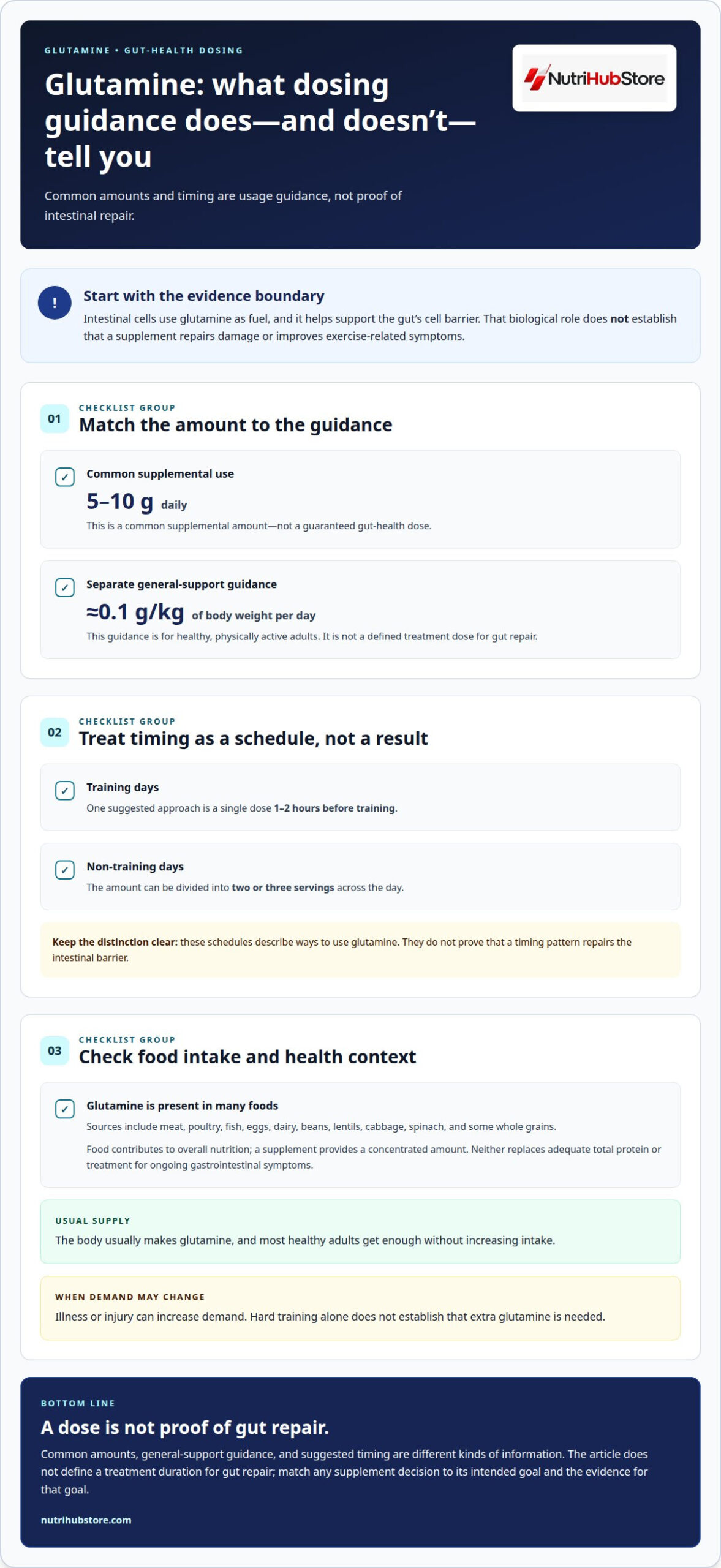
Glutamine supplementation protocols vary with the goal and routine, so a general intake figure isn’t a guaranteed gut-health dose. Common supplemental doses are 5 to 10 grams daily, while general support guidance for healthy, physically active adults gives approximately 0.1 g/kg of body weight per day.
What glutamine dose and duration have been studied for gut health? Common supplemental use is 5 to 10 grams daily, but the relevant protocol depends on the study population and outcome being measured. For general support, approximately 0.1 g/kg of body weight per day is a separate guideline, not a defined treatment duration for gut repair.
Timing can also differ: one suggested approach is a single dose 1-2 hours before training. On non-training days, the amount can be divided into two or three servings across the day. These schedules describe use, not proof that a specific timing pattern repairs the intestinal barrier.
Glutamine is also found in foods, including meat, poultry, fish, eggs, dairy, beans, lentils, cabbage, spinach, and some whole grains. Food intake contributes to overall nutrition, while a supplement provides a concentrated amount. Neither approach makes glutamine a substitute for adequate total protein or treatment for ongoing gastrointestinal symptoms.
If you’re choosing a supplement as a strength athlete, first identify your goal: general intake, support for a training routine, or a health concern. Then compare the intended dose with the product’s serving information and consider whether the evidence addresses that same goal. Gut-barrier support is a reason to understand glutamine, not proof that supplementation will resolve symptoms.
Glutamine as a conditionally essential amino acid
Glutamine is conditionally essential, not routinely essential: the body usually makes it, but illness or injury can increase demand. That distinction matters to strength athletes because hard training alone doesn’t establish that extra glutamine is needed. The useful question is whether the body’s supply can meet demand during a particular period of physiological stress.
Glutamine is one of the 20 amino acids that build proteins. An essential amino acid must come from food, while the body can usually synthesize glutamine itself. “Nonessential” therefore describes the usual supply relationship, not the amino acid’s value. Glutamine still has functions in the body, even when extra intake isn’t needed.
The term “conditionally essential” refers to a change in demand. During illness or injury, the body may need more glutamine than it produces under ordinary conditions. That’s why a person’s health state can matter more than a supplement’s popularity among gym-goers. A healthy adult following a regular strength programme doesn’t automatically have the increased demand associated with illness or injury.
Most healthy adults get enough glutamine and don’t need to increase their intake. For a lifter, that’s a practical starting point: consider the broader context before treating a tough training block as evidence of deficiency. A demanding session, muscle soreness, or a planned increase in exercise volume does not, by itself, establish that supplementation is necessary.
Catabolic stress changes the picture at a cellular level. During this state, intracellular glutamine pools can fall by 50 per cent. This figure describes a reduction in cellular stores during catabolic stress, not a routine loss caused by every workout. It also doesn’t mean all strength athletes need to replace half their glutamine through a supplement.
Consider two examples: a healthy lifter completing a typical training week, and someone experiencing illness or injury. The first situation doesn’t automatically signal higher glutamine needs; the second can increase demand. The label “conditionally essential” helps explain why one fixed supplement rule cannot fit everyone or every training phase.
For strength athletes, the sensible takeaway is to distinguish training ambition from a genuine increase in physiological demand. Glutamine’s status doesn’t prove that taking it improves muscle growth or performance. Instead, it explains why the body usually manages its own supply, while particular stresses can change that balance. This context helps make supplement choices more deliberate.
When comparing options, keep the goal clear: a supplement can add glutamine, but the conditional-essential label alone doesn’t show that you need it. Review nutrition supplement options alongside your training routine and overall intake, then judge any choice against the specific need you’re trying to address.
Glutamine supplements and peptide forms
A supplement label describes glutamine’s chemical form, not a proven difference in results. When choosing between free-form and peptide products, first focus on what the label contains and whether that form suits your intended intake.
L-glutamine is the form commonly discussed in human nutrition. Glutamine also has a D-form, but the two forms aren’t interchangeable labels for the same supplement. Check the ingredient name: “L-glutamine” identifies the form, while “glutamine peptide” describes glutamine joined to other amino acids.
A peptide is a short chain of linked amino acids. In a glutamine peptide product, glutamine is part of that chain rather than presented only as a free amino acid. The ingredient list may therefore name a peptide source and other amino acids, so read beyond the front-of-pack claim.
That difference describes composition, not a guaranteed advantage. The available facts don’t establish that peptide forms repair the gut lining more effectively, improve muscle outcomes, or work better during exercise than free-form L-glutamine. A product’s form alone cannot tell you whether it fits your goal.
Use the label as a practical comparison tool. Identify the glutamine form, check the amount per serving, and note whether other ingredients contribute to the total. For example, a serving combining glutamine with other amino acids differs in composition from one listing only free-form L-glutamine.
Common glutamine supplement doses are 5 to 10 grams daily, though individual needs may vary. Treat that as a reported range, not an instruction to take the upper amount or proof that a particular form works. Serving size, total daily intake, diet, and the reason for use all shape the choice.
Protein intake matters too. Glutamine is one amino acid, not a replacement for adequate total protein or a balanced approach to nutrition. If your goal is to support training nutrition, compare the glutamine product’s ingredients with your existing protein sources, rather than stacking products that duplicate ingredients without a clear purpose.
For a straightforward decision, choose by ingredient transparency and serving information, then match the form to the intended use. Don’t assume “peptide” means more effective, or that a higher glutamine amount means better support. Reviewing nutrition supplement options can help you compare product categories while keeping the label and your overall intake in view.
Safety and gastrointestinal side effects
A dose reported as tolerated is not a target for sports nutrition. Glutamine doses up to 0.65 g/kg of body weight per day have been reported as well tolerated, but that figure describes a safety threshold, not a recommended intake. For example, don’t treat it as a reason to increase a routine serving.
Glutamine can be taken as a supplement, but pay attention to digestive symptoms whenever you add a new product. Record the amount, timing, other supplements, and any changes in symptoms. This simple log gives a healthcare professional useful details instead of relying on your memory after several training sessions.
A symptom that appears after a serving doesn’t, by itself, identify glutamine as the cause. Meal timing, exercise, hydration, and other nutrition products can also affect how your digestive system feels. Keep your routine simple when introducing a supplement, and avoid adding multiple new products at once. Otherwise, it becomes harder to connect a change with its likely trigger.
Some health situations call for professional guidance before amino acid supplementation. People with kidney disease, liver disease, serious medical conditions, or medication use should consult a healthcare professional before taking glutamine or another amino acid supplement. In these cases, an individual review matters more than a dose commonly used by healthy adults.
Before starting, write down your current medications and supplements, why you’re considering glutamine, and the serving you plan to use. Share that information with your healthcare professional. This helps them consider your health status and overall nutrition routine, rather than assessing glutamine in isolation.
For a strength athlete, a sensible safety review distinguishes ordinary training discomfort from new or persistent gastrointestinal symptoms. Note whether symptoms occur after a serving, around a meal, or during exercise. If symptoms persist or worsen, don’t treat supplementation as a self-directed fix. Seek professional assessment.
Keep the dose context precise. The reported 0.65 g/kg of body weight per day figure is not an intake goal, and exceeding a typical serving to chase a gut or recovery effect has no support in that threshold. More glutamine does not automatically mean more benefit. A clinician can weigh medical history, medication use, and the purpose of supplementation.
Good sports nutrition starts with the full picture: health conditions, medication, food intake, and training demands. Use those details to guide a conversation before adding an amino acid supplement, especially if kidney or liver disease or ongoing digestive symptoms are involved.
Glutamine supplementation and athletic performance
Glutamine has plausible roles in recovery, but research hasn’t established consistent benefits for athletic performance. For athletes considering glutamine supplementation for gut lining repair in strength athletes, the key question is whether a proposed benefit translates into a measurable training outcome.
Research doesn’t support glutamine as a way to build muscle mass in athletes. A few studies suggest it may reduce soreness after high-intensity exercise or lower the risk of getting sick. These possible effects don’t establish dependable improvements in strength, muscle growth, or performance across sports.
Specific study results need their context. After eccentric exercise, one study reported improved strength recovery and reduced soreness with 0.3 g/kg/day for 72 hours. That was a short protocol for a particular recovery outcome, not a general prescription for every strength athlete.
A study of male judo athletes found that 3 g/day for two weeks attenuated suppression of neutrophil function and markers of muscle damage during intensive training. A randomized study in combat-sport athletes reported that three weeks of supplementation improved salivary immunoglobulin A and hormonal status, while reducing upper respiratory tract infection incidence after intensive training. These findings concern specific markers and illness outcomes, not muscle gain.
Are glutamine supplements permitted under anti-doping rules for strength athletes? The performance findings described here don’t establish whether glutamine is permitted in a particular competition. Check the applicable anti-doping rules before use, since performance research and competition rules answer different questions.
What do sports nutrition guidelines recommend for glutamine, protein, and gut health? For healthy, physically active people during short periods of increased physiological stress, guidance gives approximately 0.1-0.3 g/kg of body mass per day. Athletes undertaking intense daily training are also advised to take 3 to 6 g per day, preferably after training. Glutamine doesn’t replace adequate total daily protein.
These figures describe different guidance, not a reason to combine amounts or pursue a higher dose. Match intake to the training context and intended outcome, such as recovery during an intense block. Evidence for glutamine supplementation for gut lining repair in strength athletes doesn’t establish that it prevents exercise-related symptoms or improves performance.
Energy, protein intake, and recovery remain central to training nutrition. Consider glutamine only in relation to a specific goal, rather than treating it as a muscle-building shortcut. Keep claims about gut-barrier support separate from evidence about strength and performance, then assess whether the proposed benefit matters to your training.
Nutrihub Store: Ronnie Coleman Creatine XS
Nutrihub Store offers Ronnie Coleman Creatine XS for athletes whose next training decision concerns creatine, not glutamine or gut repair. Research on glutamine doesn’t make creatine a substitute for gut-health support, so keep each supplement tied to its own purpose.
If you’re reviewing your broader training nutrition, Kevin Levrone Gold Whey is another option. For strength athletes setting up a training space, Nutrihub Store also offers Gym Setup and Fitness & Sports Flooring. These offerings address training equipment, flooring, and nutrition, not medical needs.
Choose based on the goal you’re working toward, and keep health concerns separate from general sports nutrition choices. Contact Nutrihub Store to explore its training and nutrition offerings.
Make your next supplement choice goal-led
Before changing your routine, decide what you want to track: comfort during training, recovery between sessions, or a broader nutrition habit. A clear goal helps you judge whether a supplement fits your plan, rather than adding it simply because it appears in a strength-training routine.
For glutamine supplementation for gut lining repair in strength athletes, ground your decision in your specific needs and the evidence for the outcome you care about. If digestive symptoms persist, treat them as a health concern, not simply a training variable. Your next step can be straightforward: review your routine, note what you want to change, and choose accordingly.
Build your training choices around one clear goal at a time, and move forward with confidence.
Frequently Asked Questions
What is glutamine?
Glutamine is an amino acid, one of the building blocks used to make proteins. The body usually produces it, while foods such as eggs, dairy, beans, and meat also provide it. For a practical dietary review, consider the full day’s meals rather than judging glutamine intake from one food or supplement. Its presence in a protein-rich meal doesn’t show that a separate product is needed.
What are the side effects of taking glutamine?
Pay attention to any new or worsening digestive symptoms after adding a glutamine product. The timing can help you discuss symptoms, but it doesn’t identify the cause by itself. Keep a simple record of the product, serving, meals, and training around the time symptoms occur. If symptoms persist or worsen, stop adjusting the supplement on your own and seek professional guidance.
What evidence supports glutamine for gut lining repair or intestinal permeability?
The evidence supports a biological rationale, not a firm claim that supplements repair the gut lining. Intestinal cells use glutamine, but that mechanism doesn’t establish a clinical benefit for permeability or symptoms during exercise. Studies also haven’t proven a benefit for inflammatory bowel disease. Keep these distinctions in mind when evaluating a product claim: a proposed mechanism and a demonstrated outcome are different forms of evidence.
What does research show about glutamine supplementation in strength athletes?
Research doesn’t establish glutamine as a dependable way to increase strength or muscle mass. Some findings concern specific recovery or immune measures in athletes under intense training, which are not the same as demonstrating better results across a strength programme. When assessing a claim, ask what outcome was measured: a change in a marker, soreness, or illness incidence doesn’t automatically mean improved lifting performance.
What are the risks, side effects, and contraindications of glutamine supplements?
The main practical concern is taking an amino acid supplement without considering health conditions, medication, or other products in your routine. Don’t treat a reported safety threshold as a personal target, and avoid increasing your serving to chase a stronger effect. Before use, write down why you want to take glutamine and what else you use. This gives a healthcare professional a clearer basis for guidance.
Can glutamine supplementation affect kidney or liver health, or interact with medications?
People with kidney disease, liver disease, serious medical conditions, or medication use should consult a healthcare professional before taking glutamine. Bring the supplement label and a current list of medicines and other supplements to that discussion. This lets the professional consider the exact product alongside your health history, rather than relying on a general dose or advice intended for someone else.
Which glutamine supplement forms and quality certifications should athletes look for?
Choose a label that clearly identifies the glutamine form and the amount per serving. Free-form L-glutamine and glutamine peptides describe different ingredient compositions; neither name alone proves superior results. Athletes in tested sport should consider whether a product has a relevant third-party sport certification and whether it applies to that exact product. Certification relates to screening, not proof of gut or performance benefits.