

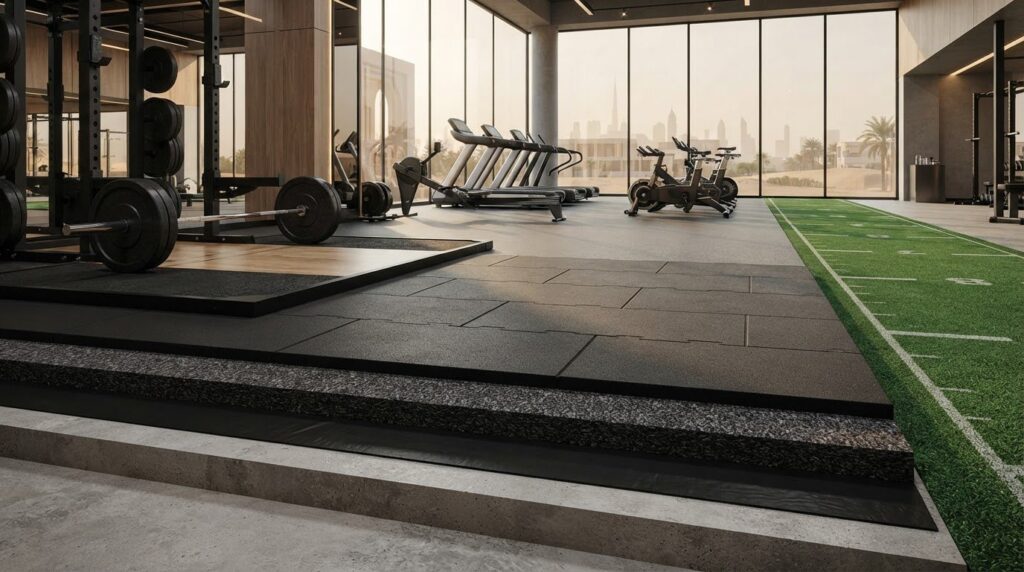
A pristine rubber finish won’t protect your facility if the concrete slab underneath fractures on day one. Most operators prioritize aesthetic top layers, yet true subfloor defense determines whether your space survives heavy deadlifts or degrades within months. Sourcing the right fitness flooring UAE facilities demand means looking past surface style to solve thermal expansion, trapped humidity, and severe kinetic impact.
You shouldn’t have to battle noxious off-gassing trapped inside air-conditioned rooms, or watch interlocking tiles curl and separate at the seams under daily abuse. Subfloor damage and shifting surfaces compromise lifter safety and turn routine floor care into an ongoing operational headache.
Discover how to choose, specify, and maintain high-performance fitness flooring built to withstand intense training and regional climate demands across the UAE. We break down exact millimeter profiles across free-weight and functional zones, target density standards that stop structural vibration, and practical installation methods that keep your training environment odor-neutral and solid for years to come.
Key Takeaways
- Subfloor defense begins with matching kinetic force reduction to high-impact zones, preventing structural concrete slab fractures beneath heavy barbell drops.
- Specifying the right fitness flooring UAE facilities require means pairing high-density rubber compounds with certified low-VOC materials to keep indoor air clean and odor-free.
- Tailoring thickness profiles across your layout protects equipment and lifters, reserving lean 8mm rolls for cardio and heavy-gauge tiles for strength areas.
- Managing regional thermal cycling and humidity requires specialized moisture mitigation strategies to stop adhesive failure, mold growth, and tile expansion.
- Accurate subfloor leveling combined with rigid perimeter locking eliminates seam separation, uneven equipment wobble, and dangerous floor drift over years of commercial use.
Understanding Fitness Flooring Mechanics and Subfloor Protection in the UAE
Dropping a loaded barbell tests far more than your bumper plates. It unleashes high-velocity kinetic energy that hunts for the path of least resistance. Without an engineered shock buffer, these impact waves travel directly through brittle screed and into building foundations. Multi-story developments and mixed-use commercial facilities across the nation face severe structural resonance, where unchecked vibrations turn walls and floors into sounding boards. Much like traditional sprung floor mechanics dissipate kinetic forces during dynamic athletics, commercial fitness flooring UAE gyms install must absorb severe downward strikes while maintaining high surface traction so lifters never slip during technical movements.
Impact Dispersion vs. Surface Hardness
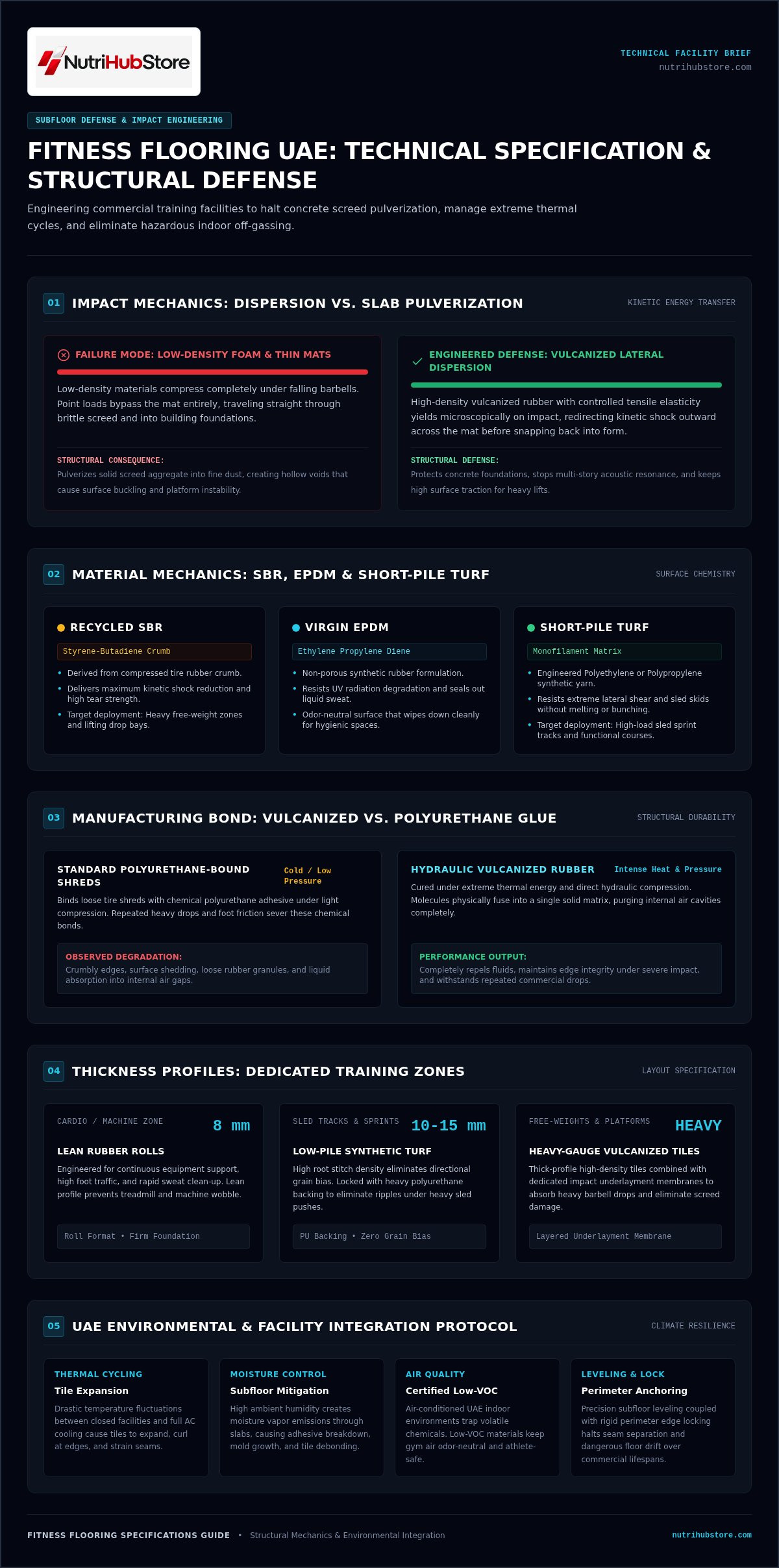
Surface hardness alone cannot protect underlying slabs. Facility managers often confuse a stiff exterior texture with true kinetic dissipation. Cheap, low-density foam compresses completely under a dropped bar, transferring peak shock straight into the base foundation. High-performance spaces demand dense, vulcanized rubber engineered with controlled tensile elasticity. This physical structure allows the compound to yield slightly at a microscopic level, spreading kinetic shock laterally across the mat before snapping back into shape. It delivers the firm, slip-resistant base athletes need for heavy squats without passing devastating impacts downward.
The Structural Risk of Subfloor Concrete Pulverization
Repetitive point loads destroy subfloor concrete silently. Heavy drops onto thin mats pulverize brittle screed aggregate, grinding solid concrete into fine dust beneath the surface. Once these hollow cavities form, surface tiles bow, lifting platforms wobble, and tiles separate at the seams under ordinary foot traffic.
Remediating pulverized building slabs requires complete operational shutdowns, specialized demolition equipment, and new curing cycles that stall business for weeks. A defensive layout pairs heavy vulcanized rubber tiles with dedicated impact underlayment membranes. This layered defense shields vulnerable concrete slabs, controls airborne noise, and keeps your fitness flooring UAE facility durable through years of heavy deadlifts.
Evaluating Fitness Flooring Materials: SBR, EPDM, and Functional Turf
Every raw material introduces specific mechanical tradeoffs. Choosing the wrong surface compound leads to premature shredding, lingering chemical odors, or impossible cleaning routines. High-performance fitness flooring UAE training centers rely on typically blends recycled Styrene-Butadiene Rubber (SBR), virgin Ethylene Propylene Diene Monomer (EPDM), or heavy-duty synthetic turf depending on the training style.
- Recycled SBR: Built from dense tire rubber crumb, this compound offers maximum kinetic shock absorption and tear strength for heavy free-weight stations.
- Virgin EPDM: Non-porous synthetic rubber that resists UV rays, seals out liquid sweat, and provides smooth, odor-neutral surfaces that wipe down easily.
- Short-Pile Turf: Polyethylene or polypropylene yarn matrices designed specifically to handle lateral shear and sled skids without melting or bunching.
Vulcanized Rubber vs. Polyurethane-Bound Shreds
Standard budget mats rely on polyurethane glue to bind loose tire shreds together under light pressure. Over time, friction and heavy drops break these chemical bonds, creating crumbly edges and shed granules across your facility. In contrast, vulcanized rubber cures under intense heat and direct hydraulic compression. This chemical fusion eliminates internal air pockets, producing a uniform molecular structure that repels liquids and easily withstands repeated commercial drops.
Specialized Synthetic Turf for Sled Tracks
Decorative landscape turf fails instantly under metal sled runners. Functional tracks require a dense, texturized monofilament yarn with a low pile height between 10mm and 15mm. High root stitch density prevents directional grain bias, ensuring smooth resistance whether pushing forward or pulling backward. A heavy polyurethane backing locked to the subfloor with commercial-grade adhesive stops ripples from forming during loaded sprints.
Balancing these materials across your layout keeps your facility clean and structurally sound. If you are outfitting a full strength training area or dedicated track, exploring commercial-grade fitness and sports flooring options ensures your base materials match your athletes’ daily demands.
Selecting the Correct Flooring Thickness Across Dedicated Training Zones
One thickness profile cannot serve an entire fitness facility. Forcing a single 10mm roll across every square meter leaves your concrete vulnerable to heavy free weights, while installing 40mm tiles under stationary bikes wastes budget. Specifying performance fitness flooring UAE operators trust starts with auditing the exact training movements planned for each square meter.
- 8mm to 10mm: Ideal for light cardio decks, spin studios, selectorized machine lines, and stretching zones where impact protection is secondary to traction and surface sanitation.
- 15mm to 20mm: The baseline standard for dumbbell bays, functional cross-training grids, and kettlebell zones handling moderate drops up to 30 kilograms.
- 30mm to 50mm: Mandatory for Olympic weightlifting zones, deadlift platforms, and power cages where heavy barbells drop from waist or overhead heights.
Pairing different thicknesses requires bevelled transition ramps. Sudden height variations create tripping hazards and damage vacuum equipment. Tapered edge reducers bridge the height gap cleanly between 10mm cardio zones and 40mm lifting pits.
Interlocking Tiles vs. Seamless Rolled Rubber
Interlocking tiles snap together quickly without permanent adhesive. Their puzzle-cut edges hold seams tight under lateral pressure, making them practical for modular areas or spaces requiring future reconfiguration. Rolled rubber, by comparison, eliminates most seam breaks across large footprints. It creates a smooth, continuous fluid barrier that prevents mop water and sweat from seeping downward, delivering superior hygiene across massive commercial floors.
Zoning Strategy: From Strength Platforms to Recovery Areas
Keep heavy impact zones away from primary reception entries and shared perimeter walls. In multi-level facilities, acoustic underlayment membranes positioned beneath 30mm strength tiles isolate structure-borne vibrations, preventing low-frequency thuds from reverberating through tenant offices below.
Planning these zone depths from day one avoids operational bottlenecks later. Aligning your structural layout with end-to-end gym setup services UAE specialists provide guarantees your subfloor prep, electrical drop lines, and rubber thicknesses integrate into a cohesive, high-performance training floor.
Managing UAE Climate Variables: Thermal Cycling, Moisture, and Odors
Switching off commercial air conditioning overnight creates rapid heat spikes inside closed gyms. These extreme daily temperature swings force rubber to expand during the dark hours and contract when the cooling blasts again at dawn. Inferior installations buckle under this stress, pushing seams apart and curling outer edges. Surviving regional conditions demands fitness flooring UAE facilities can subject to thermal stress without risking structural warping or trapped moisture decay.
Concrete slabs present another silent challenge. Warm, humid outdoor conditions cause concrete foundations to sweat beneath impermeable rubber sheets. When moisture has nowhere to evaporate, it liquefies standard glues, triggers foul mildew pockets, and rots flooring substrates from below.
Adhesive Stability and Concrete Moisture Mitigation
Water-based adhesives dissolve rapidly when slab sweat accumulates. Successful longevity requires dual-component polyurethane or moisture-cured epoxy bonding agents engineered for severe thermal fluctuation. Applying an epoxy moisture vapor barrier directly onto the concrete screed prior to unrolling rubber seals out hydrostatic pressure, keeping the bond intact permanently.
VOC Off-Gassing and Air Quality Control
High ambient heat accelerates the release of volatile organic compounds trapped in low-grade rubber. Cheap tiles manufactured with unrefined tire crumbs and chemical solvents release harsh petroleum odors that linger inside sealed, climate-controlled rooms. Specifying low-VOC, pre-washed vulcanized tiles carrying GREENGUARD Gold or FloorScore certification keeps ambient indoor air crisp and safe for hard-breathing athletes.
Facility Integration: Preparing Subfloors and Sourcing Technical Infrastructure
Even premium vulcanized rubber fails when laid over uneven screed. Proper site preparation determines whether your tiles stay flush or shift under daily torque. A two-millimeter dip in the concrete generates dead spots, causing heavy benches to rock and seam lines to separate under foot pressure. Securing commercial fitness flooring UAE facilities rely on begins with disciplined slab preparation and rigid perimeter locking profiles that prevent lateral floor creep over time.
Subfloor Leveling, Cleaning, and Anchor Layout
Inspect raw slabs using a three-meter straight edge before installing any materials. High spots demand mechanical diamond grinding, while low depressions need rapid-setting self-leveling compound. Clear away all lingering plaster dust, grease, and efflorescence. Residual construction grit breaks adhesive bonds and causes abrasive grinding underneath floating tiles.
Map equipment anchor footings before securing your mats. Bolting heavy power cages directly through rubber can pinch the compound, creating unsightly bulges and warping nearby seams. Precision contractors core-drill clean access ports through the rubber or anchor equipment directly onto the concrete, trimming the surrounding tiles neatly around the footplates.
Securing High-Performance Infrastructure for Your Facility
High-traffic commercial spaces require verified ratings for tensile strength, dynamic friction, and flame resistance. Choosing certified materials stops premature floor fatigue and protects building structures during high-volume sessions. You can source heavy-duty surfaces, gym setup solutions, and strength equipment directly through the Nutrihub Store to ensure every layer works together from the slab up.
Establish a routine inspection schedule for high-impact drop bays. Swapping out high-wear tiles near deadlift stations prevents shock transmission from reaching the subfloor, preserving the integrity of your fitness flooring UAE installation over years of heavy use.
Building a Resilient Foundation for Your Facility
A high-performance gym setup always starts from the foundation up. Protecting your space against fractured subfloors, thermal shifting, and moisture wear requires matching vulcanized rubber density directly to your training zones. Specifying certified, low-VOC fitness flooring UAE facilities trust creates a durable, odor-neutral environment engineered for daily athletic abuse.
Getting the mechanics right today spares your business expensive slab remediation and disruptive closures down the road. With full-scale facility setup expertise and sports flooring solutions built for commercial endurance nationwide, creating a safe, professional training ground is entirely within reach.
Give your athletes the solid base they need to train safely. With an engineered floor absorbing every drop, your community can focus on setting personal records with total confidence.
Frequently Asked Questions
What is the recommended fitness flooring thickness for heavy deadlifts in the UAE?
Heavy deadlifts require a minimum thickness of 30mm to 50mm high-density vulcanized rubber or composite drop tiles. Thinner 15mm mats cannot absorb peak point-load impact from dropped barbells, which eventually fractures underlying screed. Pairing a 30mm tile with an acoustic underlayment disperses downward kinetic force laterally, ensuring concrete slabs remain intact while eliminating excessive bounce and controlling structural building vibrations during heavy pulling sessions.
Can I install rubber gym flooring directly over ceramic tiles?
You can lay rubber flooring over ceramic tiles, but you must proceed with caution. Dropping weights onto thin rubber over brittle ceramics will crack the tiles beneath. For free-weight zones, install at least 30mm tiles to absorb shock before it reaches the ceramic base. Additionally, use interlocking floating tiles rather than permanent glues if you need to protect the original tile surface for lease handover requirements.
How do I eliminate the strong rubber odor from newly installed gym tiles?
Eliminating initial odors requires active ventilation and thorough initial washing. Mop newly laid tiles with a neutral pH degreaser diluted in warm water, avoiding harsh petroleum-based chemicals that degrade rubber binders. Keep air exchange systems running continuously for the first seventy-two hours. Specifying certified low-VOC fitness flooring UAE suppliers provide significantly reduces off-gassing from day one, preventing pungent sulfur odors from getting trapped inside climate-controlled spaces.
What is the difference between SBR and EPDM gym flooring?
Recycled SBR rubber comes from processed vehicle tires, delivering outstanding kinetic shock absorption and high density at an economical level. Virgin EPDM is a synthetic compound that offers superior UV stability, vibrant color flecks, and a non-porous structure. While SBR excels as a durable base for heavy weight impact, EPDM wear layers resist moisture and harsh sunlight, making them easier to sanitize and maintain over time.
Why do rubber gym floor seams pull apart or buckle over time?
Seams separate or buckle due to thermal cycling, trapped slab humidity, or inadequate edge confinement. When facility air conditioning shuts off overnight, ambient temperatures surge, causing rubber to expand. Once cooling kicks on, the tiles contract. Without perimeter compression edges or flexible polyurethane adhesive, this movement forces interlocking teeth apart. Trapped concrete moisture also breaks adhesive bonds, letting loose tiles drift under aggressive foot friction.
Can air conditioning cycles damage fitness flooring adhesives in the UAE?
Yes, aggressive cooling cycles can destroy standard adhesives. Switching climate systems off during closures creates rapid temperature and humidity swings. Warm air meeting cool concrete produces condensation beneath impermeable rubber, which dissolves water-based glues and causes bubbling. Commercial fitness flooring UAE installations avoid this failure by applying an epoxy vapor barrier to the subfloor alongside two-part polyurethane bonding agents engineered to withstand severe thermal expansion without delaminating.
How should commercial rubber gym floors be cleaned and maintained daily?
Daily maintenance requires sweeping or dry vacuuming to remove abrasive sand and dust before it grinds into the rubber matrix. Follow up with a damp microfiber mop using a neutral pH cleaner. Never saturate the floor with standing water, as liquid seeps through seams to weaken subfloor glue. Avoid acidic solutions, citrus cleaners, and bleach, because harsh solvents dry out rubber compounds, causing brittle edges and surface cracking.