


What if the tingling after your pre-workout isn’t a sign that it’s working? If you’re trying to understand the pre workout tingling sensation beta alanine safe dosage, it’s reasonable to wonder whether the feeling is expected or a warning sign. Beta-alanine can cause temporary pins and needles, called paresthesia, but the sensation doesn’t prove that a supplement is effective.
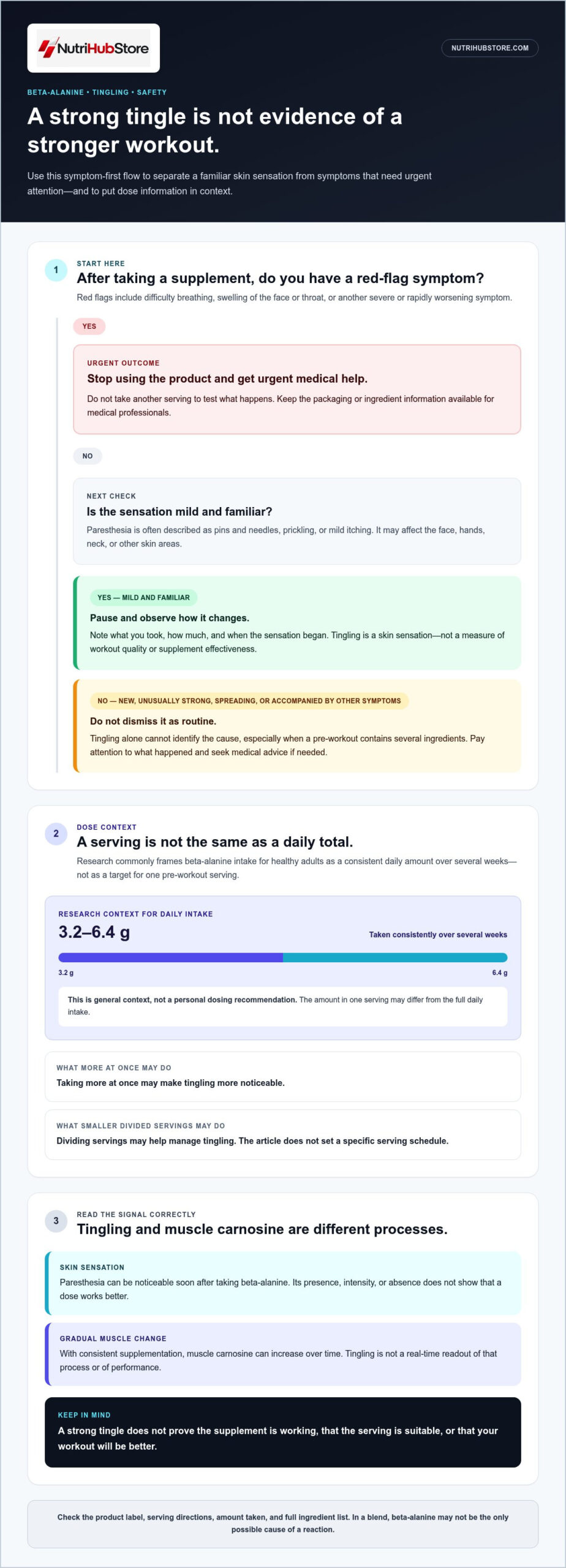
The dose can add to the confusion. A pre-workout serving is not necessarily the same as a full day’s beta-alanine intake, and taking more at once may make tingling more noticeable. Research commonly frames daily intake for healthy adults at 3.2 to 6.4 grams, taken consistently over several weeks. That’s general context, not a personal dosing recommendation.
This guide explains why beta-alanine can cause tingling, what research says about daily dosing and smaller divided servings, and what the sensation does not tell you about performance. You’ll also learn which symptoms may be a reason to stop taking a product and seek medical help, so you can make a more informed choice without relying on supplement marketing or gym anecdotes.
Key Takeaways
- Recognise paresthesia as a temporary change in skin sensation, not a scorecard for workout quality.
- Learn how beta-alanine supports muscle carnosine production, and why that process, rather than tingling, is linked to its potential role during intense exercise.
- Understand the pre workout tingling sensation beta alanine safe dosage discussion by separating research-based daily intake from the amount in one serving.
- See how smaller divided servings may help manage tingling, and why severe symptoms deserve attention.
- Use the label to check ingredients and serving directions, especially when a blend makes it harder to identify what caused a reaction.
Why Does a Pre-Workout Cause Tingling? Beta-Alanine and Paresthesia
A prickling or itchy feeling after taking a pre-workout can be unsettling, especially if it’s new. Beta-alanine is a known possible cause: it can trigger paresthesia, a temporary altered skin sensation. That familiar tingling doesn’t show that your workout is better, that the supplement is working, or even that beta-alanine is definitely responsible.
Beta-alanine can activate sensory nerve endings in the skin, producing this sensation in some people. The overview of Beta-alanine also describes paresthesia as a common side effect. In a pre-workout blend, beta-alanine may sit alongside other ingredients, so don’t assume every reaction comes from one ingredient. The label, amount taken, and timing can help you describe what happened.
What does beta-alanine tingling feel like?
People commonly describe paresthesia as pins and needles, prickling, or mild itching. It may affect the face, hands, neck, or other areas of skin, but its location and intensity can differ. Some people notice it clearly; others experience little or none. There isn’t one sensation that everyone should expect, and its presence or absence doesn’t measure workout quality.
A brief, familiar tingling sensation is different from symptoms that affect breathing or cause swelling. If a sensation is new, unusually strong, spreading, or accompanied by other symptoms, don’t dismiss it as a routine pre-workout effect. Tingling alone can’t identify the cause, particularly when a blend contains several ingredients.
Is paresthesia the same as an allergic reaction?
No. Tingling alone doesn’t establish an allergy or diagnose which ingredient caused the feeling. A typical beta-alanine-related sensation is a skin feeling, not proof of an allergic reaction. But it’s also not possible to rule out another cause based on an article description.
Get urgent medical help if you have difficulty breathing, swelling of the face or throat, or another severe or rapidly worsening symptom after taking a supplement. Don’t take another serving to test what happens, and don’t try to mask a suspected reaction with medication. Stop using the product and keep its packaging or ingredient information available to share with medical professionals.
If the sensation is mild and familiar, pause and pay attention to how it changes rather than treating it as a performance signal. Note what you took, how much, and when symptoms began. That record can help you explain the episode if you seek medical advice. The question of pre workout tingling sensation beta alanine safe dosage involves both the amount per serving and your overall response. The next section explains why the feeling alone can’t tell you whether a dose is suitable for you.
How Beta-Alanine Works, and What the Tingling Does Not Tell You
The tingling and the potential exercise benefit come from different processes. Beta-alanine can cause a noticeable skin sensation soon after it’s taken, while its proposed role in performance depends on gradually increasing carnosine inside muscle. Feeling a strong tingle doesn’t mean muscle carnosine has risen, that a serving is effective, or that you’ll perform better.
From beta-alanine to muscle carnosine
Muscle cells make carnosine from two amino acids: beta-alanine and histidine. Beta-alanine is the limiting precursor, meaning its availability can affect how much carnosine the body can produce. With consistent supplementation, muscle carnosine can increase over time. This is a gradual process, not an immediate effect you can judge by how your skin feels after one serving.
During hard efforts, chemical changes inside working muscle contribute to fatigue. Carnosine may help buffer some of the acidity associated with these changes, supporting the muscle’s ability to keep contracting. It doesn’t prevent all fatigue or erase the burning feeling during strenuous exercise. Fatigue has multiple causes, and carnosine is one part of a complex response, not a switch that turns discomfort off.
The International Society of Sports Nutrition position stand on Beta-Alanine reviews the evidence for supplementation and performance. Research suggests a potential benefit is more relevant to repeated or sustained high-intensity efforts, particularly all-out exercise lasting about one to four minutes, rather than every workout or activity. The effect isn’t guaranteed, and results can vary with the person and exercise performed.
Why the tingling is not a performance score
Paresthesia is a sensory response; carnosine loading is a separate process in muscle. One can be noticeable right away, while the other develops with repeated intake over time. Tingling is not a real-time readout of muscle carnosine, and a stronger sensation doesn’t show that a dose works better.
So how should you interpret the pre workout tingling sensation beta alanine safe dosage question? Treat the sensation as a possible side effect, not a test of product quality or training readiness. How a pre-workout blend feels can’t establish what its ingredients will do for performance. Instead, separate what you feel from what research measures, and look at the product label and evidence for the ingredient itself.
If you’re exploring sports supplements, you can browse pre-workout and nutrition supplements while keeping ingredient information, rather than tingling, central to your decision. Next, consider how research describes daily intake and why the total amount differs from the amount in a single serving.
Beta-Alanine Safe Dosage: Daily Amount, Split Servings, and Timing
How much is one serving, and how much is a full day’s intake? They’re not necessarily the same. Research commonly discusses beta-alanine as a repeated daily total, while a pre-workout label gives the amount in one serving. Treat the figures below as research context for healthy adults, not a personal prescription. Your health, medications, and other supplement sources can affect what’s appropriate for you.
How much beta-alanine is commonly studied?
Research commonly frames daily beta-alanine intake at 3.2 to 6.4 grams, taken consistently for at least four weeks to raise muscle carnosine. These figures describe study protocols, not a target everyone should follow. Check the label for beta-alanine per serving and count it toward any total; don’t assume a scoop provides the full daily research amount. If you have a health condition, take medication, or have personal concerns, speak with a qualified clinician before using it.
The NIH-hosted review on itch evoked by beta-alanine examines the sensory response associated with the ingredient. For dosing, the practical distinction is between the total taken across a day and the amount taken at once.
| Research context | Amount or approach | What to keep in mind |
|---|---|---|
| Daily intake | 3.2–6.4 g per day | A range studied over time, not an individualized recommendation. |
| Supplementation period | At least four weeks | Research focuses on consistent daily use, not a single pre-workout serving. |
| Divided servings | About 0.8–1.6 g per serving | Smaller servings may reduce peak tingling for some people, but can’t guarantee it will be avoided. |
| Single larger serving | Tingling can occur around 800 mg or more | This is a reported threshold, not a prediction of how any individual will respond. |
Should you split the dose or take it before training?
Beta-alanine is studied as a consistent daily supplement, rather than as an ingredient that needs to be taken immediately before exercise for an instant performance effect. Dividing the total into smaller servings may make the acute sensation less noticeable for some users. That’s a tolerability strategy, not proof of greater effectiveness, and it may not prevent tingling entirely.
Start with the product’s serving directions. Don’t stack servings or add a separate beta-alanine supplement to chase a stronger sensation. To make sense of the pre workout tingling sensation beta alanine safe dosage question, check the amount per serving and account for the day’s total instead of using tingling as a guide. If you’re comparing pre-workout supplements, ingredient amounts and directions are more useful than the sensation they produce.
How to Reduce Beta-Alanine Tingling, and When to Stop
A mild, familiar prickling sensation may settle without intervention, but there’s no reliable countdown that applies to everyone. Don’t use the feeling as a reason to take more. If it happens, focus on what you took and whether anything besides tingling is occurring.
- Pause use. Don’t take another serving while you’re experiencing an unexpected reaction.
- Check the label. Look for beta-alanine, serving directions, and other ingredients. Consider whether another supplement you took may contain the same ingredient.
- Note what happened. Record the product, amount, timing, symptoms, and whether they changed or worsened. Keep the packaging available.
- Seek help if symptoms are severe. Breathing difficulty or swelling of the face or throat needs urgent medical attention.
Practical ways to make the sensation less uncomfortable
First, check how much you took per serving and whether you combined products. A pre-workout plus a separate supplement can make the total amount harder to track. Don’t repeat a dose to see whether the sensation returns, and don’t exceed the product’s directions.
Smaller divided servings may make tingling less intense for some people, but they don’t guarantee it will stop. If you’re considering a lower serving or splitting intake, proceed cautiously and follow label directions. A qualified healthcare professional can help you weigh personal concerns, especially if you have a health condition or take medication.
Which symptoms call for medical attention?
Common, temporary tingling is a skin sensation on its own. Severe, worsening, unusual, or persistent symptoms call for more caution, particularly if they appear with other changes. Tingling alone doesn’t confirm an allergy or identify its cause, so don’t assume every reaction is a routine beta-alanine effect.
Get urgent medical help for difficulty breathing, swelling of the face or throat, or another severe or rapidly worsening reaction. Don’t try to manage a suspected serious reaction by taking medication to mask symptoms. If milder symptoms persist, recur, or concern you, stop using the product and seek guidance from a qualified healthcare professional.
The key to the pre workout tingling sensation beta alanine safe dosage question is to respond to the whole picture, not just the tingle. Check the label and your total intake, but let concerning symptoms guide you toward stopping and getting help rather than experimenting with another serving.
Choosing a Pre-Workout with Beta-Alanine: Read the Label, Not the Tingle
A strong tingling sensation can grab your attention, but it’s a poor way to judge a pre-workout. Not every blend contains beta-alanine, and a noticeable effect doesn’t confirm what’s in a formula or how well it suits you. Start with the label, then consider your own tolerance and training needs.
What to check on a pre-workout label
Use this label-reading checklist to decide whether a product fits your routine:
- Look for beta-alanine in the ingredient panel. Don’t assume it’s included just because the product is marketed as a pre-workout.
- Check whether an amount is stated. If the label doesn’t give a specific quantity, don’t guess how much beta-alanine the formula contains.
- Compare serving size with directions. Note what the label defines as one serving and how it instructs you to use it. Don’t treat a scoop as a measure of beta-alanine unless the amount is declared.
- Review the other active ingredients. A blend may include several ingredients, so a sensation after taking it can’t automatically be attributed to beta-alanine.
Also account for other supplements you take. If beta-alanine appears in more than one product, combining them can make your total intake harder to track. Keep the packaging or a clear record of the labels you’ve checked, especially if you’re trying to understand a reaction.
When a standalone supplement or no beta-alanine may suit better
A multi-ingredient blend can be convenient, but it may make it harder to connect a sensation with one ingredient. A product with clearer ingredient amounts makes label comparisons simpler. A standalone supplement may also make it easier to identify what you’re taking, though you still need to follow its directions and account for your overall intake.
If you simply don’t like the tingling, choosing a pre-workout without beta-alanine, or skipping pre-workout, is a valid preference. You don’t need to seek out the sensation. For the pre workout tingling sensation beta alanine safe dosage question, separate three things: the amount stated on the label, the directions for a serving, and how you personally respond. If the label is unclear or you have health concerns, get guidance from a qualified healthcare professional rather than experimenting with extra servings.
Choose supplements according to your goals and routine, not whether they create a dramatic feeling. A clear label and a product you feel comfortable using are more useful than chasing a tingle.
Explore pre-workout and sports nutrition options with the label details in mind.
Make Your Next Supplement Choice with Confidence
Let comfort and clear information guide your next step, not pressure to feel a dramatic effect. If you’re weighing the pre workout tingling sensation beta alanine safe dosage, focus on what you can assess: whether the product suits your preferences, whether its label gives you enough detail to make an informed choice, and whether you feel comfortable using it as directed. You can choose a different approach if beta-alanine’s sensation isn’t for you.
Give yourself time to decide. A supplement is one part of a training routine, not a test of commitment, and you don’t need to tolerate an unwanted sensation to make progress. Explore options with your goals and preferences in mind.
Keep building your routine with informed, comfortable choices that suit you.
Frequently Asked Questions
Is beta-alanine tingling a sign that the pre-workout is working?
No. Tingling is a sensory response, not evidence that a pre-workout improves performance or that its ingredients are having the intended effect. A serving can cause a noticeable sensation without showing how much beta-alanine you’ve absorbed or whether your training will benefit. Judge a product by its label and your goals, not by how intense it feels. Don’t take extra to make the sensation stronger.
How much beta-alanine is safe to take per day?
Research commonly examines 3.2 to 6.4 grams daily, taken consistently for at least four weeks, primarily in healthy adults. This is study context, not a personalized target or assurance that the same amount suits everyone. Add up beta-alanine from all products rather than counting only a pre-workout serving. For the pre workout tingling sensation beta alanine safe dosage question, follow product directions and seek qualified clinical guidance if you have individual health concerns.
Can beta-alanine cause tingling without caffeine?
Yes. Beta-alanine can cause tingling whether or not caffeine is present, so a caffeine-free product containing beta-alanine may still cause the sensation. Conversely, a product without beta-alanine may contain other ingredients that produce noticeable effects. Check the ingredient panel instead of relying on how a product feels. If you’re uncertain what you took, keep the packaging and note the serving and timing to help explain the situation.
Does beta-alanine interact with caffeine?
The information in this guide doesn’t establish a specific harmful interaction between beta-alanine and caffeine, but that doesn’t mean every combination is suitable for every person. They can cause different effects, and a multi-ingredient pre-workout may make it difficult to identify what caused a symptom. Check the amounts and directions for each product, avoid doubling up, and ask a qualified healthcare professional about combining supplements if you take medication or have health concerns.
What happens if I accidentally take more than the serving size?
Don’t take more to test your response or try to balance the serving with another supplement. Check the label to work out what and how much you took, and note when you took it and any symptoms. If you feel unwell or are unsure what to do, contact a qualified healthcare professional promptly. Seek urgent medical help for breathing difficulty, facial or throat swelling, or severe or rapidly worsening symptoms.
Can I take beta-alanine if I have a health condition or use medication?
Ask a qualified healthcare professional before using beta-alanine if you have a health condition or take medication. They can consider your personal circumstances and the full ingredient list, including other supplements you use. Bring the product label and describe the amount you’re considering rather than relying on general dosing ranges. If you’ve already had a reaction, mention when it occurred, how long it lasted, and any symptoms beyond tingling.